Make it Clear as Day
Is your once-crystal-clear pond now looking more like a murky mess? Wondering if there’s an easy way to get your water feature back to its former glory?
In this post, you’ll learn step-by-step how to clean pond water, improve its filtration, and control pesky algae—all without overwhelming effort.
By the end, you’ll have a beautifully clear pond.
Help your pond stay clean and working smoothly with our pond maintenance service.
How to Clean Pond Water
Clean pond water by removing surface debris, using a mechanical and biological filter, and adding aeration to increase oxygen. Introduce beneficial bacteria and floating plants to reduce algae and balance nutrients. Perform partial water changes every 1–2 weeks to maintain clarity and reduce toxins.
What’s the full, professional pond cleaning process like?
How to Clean Pond Water With Fish In It

Clean pond water with fish in it by removing surface debris, vacuuming bottom sludge, and maintaining a properly sized mechanical and biological filtration system. Improve aeration with waterfalls or fountains and reduce feeding to limit nutrient buildup.
How to Clean Pond Water Naturally
Clean pond water naturally by adding beneficial bacteria, planting aquatic vegetation to absorb nutrients, and using barley straw to inhibit algae. Avoid chemicals by maintaining ecosystem balance with 40–60% plant coverage and continuous biological activity.
How to Keep Pond Water Clean
Keep pond water clean by avoiding overstocking, feeding fish only what they can eat in minutes, and maintaining equipment. Circulate the full pond volume hourly and monitor temperature to support oxygen levels and fish health.
Remove Debris and Contaminants from the Pond
Skim Surface Debris
Keeping your pond water clean starts with consistently removing debris, just as the grounds crew at Freedom Park clears fallen leaves to preserve the health of its garden ponds.
Surface debris, such as leaves and twigs, often contributes to cloudy water and excess nutrients that fuel algae growth. Using tools like a skimmer or net to regularly remove debris from the pond’s surface is essential.
Prevent Runoff
Another key to clean pond water is managing runoff.
Creating buffer zones around the pond with plants or ground covers helps filter incoming water, preventing contaminants like fertilizer and pesticides from entering your pond.
By minimizing external pollutants, you’re ensuring a healthier environment for your fish and aquatic life.
Install Pond Nets
For added protection, especially during the fall, installing leaf nets can prevent organic material from reaching the bottom of the pond. Here, it decomposes and adds to the fish waste and excess nutrients that algae feed on.
This minimizes maintenance and keeps the bottom of the pond clear.
Improve Pond Filtration Systems
Mechanical Pond Filtration
Investing in the right filtration system can significantly enhance your pond water’s clarity and quality.
A mechanical filtration system, paired with a reliable pond pump, removes suspended particles before they settle and cause murky water.
Regular maintenance, such as cleaning or replacing filter pads, ensures the system continues to provide crystal-clear water.
Biological Pond Filtration
Biological filtration complements mechanical systems by fostering beneficial bacteria.
These bacteria consume fish waste and excess nutrients, preventing algae growth and keeping your pond water healthy.
For the best results, ensure your biological filter is appropriately sized for the pond’s surface area and volume.
DIY Pond Filtration Solutions
If you’re looking for an affordable alternative, DIY solutions can be equally effective.
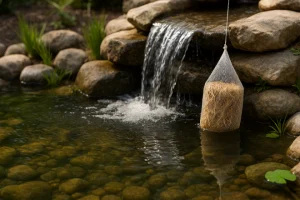
Wrapping quilt batting around a recirculating pump creates a makeshift filter that traps particles, leaving the water cleaner.
This method can work well for pond owners who want a quick and simple way to clear pond water naturally.
Control Pond Algae Growth Naturally
Introduce Beneficial Bacteria
Algae can quickly turn a pristine pond into a green, murky mess, but natural algae control methods can help keep algae under control.
One of the most effective ways is by introducing beneficial bacteria, which perform the same natural purification that keeps the small ponds around Linville Falls crystal clear.
These bacteria consume the excess nutrients that algae rely on to thrive, preventing blooms and maintaining a balanced ecosystem.
Regularly adding bacterial treatments ensures your pond stays ahead of algae growth.
Use Aquatic Plants
Aquatic plants are another powerful ally in the fight against algae.
Submerged plants, like hornwort, and floating plants, such as water lilies, absorb nutrients and provide shade, reducing sunlight exposure that encourages algae to grow.
For optimal results, aim to cover 40–60% of the pond’s surface area with plants.
Install UV Clarifiers
UV clarifiers are a complementary tool for controlling algae, especially green water that’s caused by free-floating algae. These devices use ultraviolet light to disrupt algae cells, preventing them from reproducing.
To keep the system running efficiently, regularly clean the UV bulb and ensure the clarifier is suited to your pond size.
Enhance Aeration and Circulation in Your Pond
Install Waterfalls and Fountains
Proper aeration and water circulation are critical for a healthy pond.
Features like waterfalls and fountains not only create visual appeal but also keep water moving. Moving water prevents stagnant areas and discourages algae growth.
Use Aerators
Aerators, whether floating or submerged, increase oxygen levels throughout the pond. This benefits fish, beneficial bacteria, and other aquatic life.
Water movement also aids in distributing nutrients evenly, ensuring they don’t accumulate in specific areas and lead to algae blooms.
Whether you have a small pond or a larger pond, improving water flow is essential to maintaining water clarity and supporting a balanced ecosystem.
Maintain a Balanced Pond Ecosystem
Control Fish Population
A healthy pond is all about balance, and managing your fish population plays a significant role.
Too many fish can lead to too much waste, creating nutrient-rich conditions that promote algae and other problems. Determining how many fish your pond can sustain depends on its size, filtration system, and water flow.
Removing excess fish or enhancing your filtration and aeration systems can help restore balance.
Feed Fish Sparingly
Feeding fish sparingly is equally important.
Overfeeding leads to excess food sinking to the bottom of the pond. There, it breaks down into additional nutrients that fuel algae growth.
Stick to feeding your fish what they can consume in a few minutes, and use high-quality food that reduces waste.
How to maintain a koi pond properly.
Monitor and Test Pond Water Quality
Test Water Parameters
Regularly monitoring water quality is key to identifying and solving potential issues before they escalate. Use test kits to check for ammonia, nitrate, and pH levels, ensuring the water is safe for your fish and plants.
What are the ideal pond water parameters?
Observe Pond Health
Unusual fish behavior, discoloration, or plant decay often signal deeper problems—just as sudden leaf wilt alerts would caretakers to an imbalance in the Botanical Gardens in Asheville.
Keeping an eye on your pond water’s health also involves observing the clarity and condition of the water. If you notice cloudy water or green water, addressing it promptly with the right tools and techniques can save you time and effort later.
Seasonal Considerations for Pond Maintenance
Spring Cleaning
In early spring, clean debris from the pond and inspect your filtration system to prepare for the growing season. Repair any winter damage to the pond pump or UV clarifiers before restarting them.
Autumn Preparations
Autumn requires extra attention to falling leaves.
Netting the pond helps keep leaves out, minimizing nutrient buildup that can lead to algae growth. As water temperatures drop, reduce feeding since fish metabolism slows in cooler weather.
How do you feed koi fish properly?
Winter Adjustments
Winter care focuses on maintaining oxygen exchange in frozen ponds.
Keeping a small hole in the ice allows gases to escape, ensuring the safety of fish and other aquatic life. If temperatures drop significantly, remove delicate equipment like pumps or UV clarifiers to prevent damage.
The full seasonal pond maintenance plan.
Clear Results for Beautiful Ponds: Morganton Ponds & Hardscapes Have You Covered
Maintaining a clean, clear pond can feel overwhelming, but Morganton Ponds & Hardscapes is here to help. Whether you’re starting with a new pond or enhancing your existing pond, our expert team ensures you get the beautiful, healthy pond you’ve always wanted.
Ready to transform your pond into a crystal-clear water feature? Fill out our contact form today or give us a call—we can’t wait to help bring your pond vision to life!