Pond Perfection: Keeping Your Water Garden Pristine
Have you ever looked at your pond and wondered how to keep it crystal clear and healthy all year round? Are you tired of murky water and struggling fish?
In this post, you’ll learn how to clean out a pond the way the pros do.
By the end, you’ll know how a professional Morganton pond cleaning process should go.
The Pond Cleaning Process Overview
- Gather Materials and Tools
- Prepare the Pond Area
- Drain the Pond
- Remove Fish and Debris
- Clean the Pond Surfaces
- Inspect and Maintain Equipment
- Refill the Pond
- Add Treatments and Plants
- Reintroduce Fish
- Final Checks and Maintenance Tips
1. Gather Materials And Tools For Cleaning A Pond
Before diving into the pond cleaning process, it’s crucial to gather all the necessary materials and tools. Having everything ready will streamline the cleaning and ensure you don’t miss any steps.
Essential Materials
To effectively clean your pond, you will need the following materials:
- Clean-out pump: This is essential for draining the pond water. Make sure it is capable of handling the pond’s volume.
- Fish container: A large container to temporarily hold your pond fish.
- Netting: Useful for covering the fish container to keep fish from jumping out.
- Buckets: Needed for collecting and disposing of plant debris and other waste.
- Dechlorinator: This will remove chlorine and chloramines from tap water before reintroducing fish into the pond.
- Beneficial bacteria: Helps break down organic waste and maintain a healthy pond ecosystem.
- Sludge reducer: Assists in breaking down the organic materials at the bottom of the pond, keeping the pond clean.
Essential Tools
The right tools can make cleaning a pond much easier. Here are the tools you should have on hand:
- Power washer: Ideal for cleaning the pond liner and rocks and removing algae and other debris.
- Pruning shears: Useful for trimming pond plants and removing dead plant material.
- Fish net: Essential for safely catching and transferring pond fish.
- Gloves: Protect your hands from muck and debris.
- Shovel: Handy for removing larger debris and organic materials from the pond bottom.
- Pond vacuum: Effective for removing sludge and muck from the bottom of the pond.
2. Prepare The Pond Area
Preparation is key to a smooth and efficient pond cleaning process. Setting up your tools and preparing the pond area properly will save you time and effort.
Setting up a fish holding tank is crucial for the safety of your pond fish when cleaning a pond:
- Fill a large container with the original pond water.
- Get the net ready to put over the container.
- Place the container in a shaded area to keep the water temperature stable.
3. Drain The Pond
Draining the pond is the first major step in the pond cleaning process. Properly draining the pond ensures that you can thoroughly clean all surfaces and remove debris.
Using A Clean-Out Pump
A clean-out pump is essential for efficiently draining the pond water:
- Place the clean-out pump in a shallow area of the pond.
- Attach the discharge hose and direct the water to an appropriate location.
- Monitor the water level as it drains, and be ready to catch any remaining fish as the water level drops.
Managing Water Levels
Maintaining proper water levels is crucial to protect the pond’s ecosystem and prevent stress to the fish and plants.
Keep an eye on the water level to ensure it doesn’t drop too quickly. Use buckets to manually remove remaining water if needed. Discharge the water in a location where it won’t cause any damage or flooding.
4. Remove Fish And Debris
Once the pond is drained, it’s time to remove the fish and debris. This step is essential for maintaining a healthy pond environment.
Catching And Transferring Fish
Safely catching and transferring fish is crucial to avoid harming them. Use a fish net to carefully catch the fish and transfer them to the prepared fish container.
Keep the fish container in a shaded area to maintain a stable water temperature, ensuring the fish are not stressed by sudden changes.
Removing Pond Accessories
Remove any accessories like de-icers, floating covers, and decorations to prevent damage during cleaning.
Carefully take out all pond accessories and set them aside. Clean these accessories separately before reintroducing them to the pond to ensure they do not reintroduce any debris or contaminants.
Scooping Out Muck And Debris
Removing organic waste and debris is essential for a clean pond.
Use gloves and a shovel to scoop out muck and plant debris from the bottom of the pond. Collect the debris in buckets and dispose of it properly, paying attention to any remaining water to ensure it doesn’t contain harmful materials.
5. Power Washing Rocks And Liner
Using a power washer is an effective way to clean the pond liner and rocks:
- Start at one end of the pond and work your way to the other side.
- Use the power washer to remove algae and debris from the pond liner and rocks.
- Be cautious to avoid harming any plants that might still be in or around the pond.
6. Inspect And Maintain Equipment
Regular inspection and maintenance of your pond equipment are vital for the pond cleaning process. Properly functioning equipment ensures your pond stays clean and healthy, preventing issues such as algae growth and murky water.
Checking Pond System Components
Inspecting the various components of your pond’s system is crucial. Here’s how to ensure everything is working correctly:
- Pond Pump: Check that the pond pump is functioning properly and providing adequate water flow. Clean the pump to remove any debris that might block water flow.
- Filters and Skimmers: Regularly inspect and clean the pond filter and skimmer to ensure they are effectively removing debris from the pond water. Replace any worn-out filter pads to maintain proper filtration.
- UV Light: If your pond uses a UV light for algae control, ensure it is operating correctly. Replace the bulb as needed to keep it effective.
Maintaining Pond Lights
Pond lights not only enhance the beauty of your pond but also help monitor fish and plants at night:
- Check for Burnt-Out Bulbs: Regularly check all pond lights and replace any burnt-out bulbs.
- Inspect Wiring: Ensure all wiring is intact and not exposed to water. Properly bury any exposed wires to prevent accidents.
- Clean Light Fixtures: Clean the light fixtures to remove algae and dirt, ensuring they provide clear illumination.
7. Refill The Pond
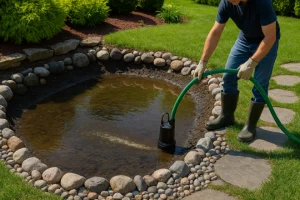
After cleaning a pond, refilling the pond is a critical step in the pond cleaning process. Properly refilling ensures a smooth transition for your pond fish and plants.
Refilling your pond with tap water must be done carefully to avoid harming the fish.
Add a dechlorinator to the tap water to remove chlorine and chloramines. This is essential to prevent harmful chemicals from affecting the pond’s ecosystem.
Ensure the tap water is at a similar temperature to the pond water to avoid shocking the fish. Gradual temperature changes help maintain a healthy fish population.
8. Add Treatments And Plants
Adding treatments and plants to your pond enhances its beauty and health. Proper planting and treatment applications are key to preventing issues like algae growth and poor water quality.
Using Water Treatments
Water treatments help maintain pond water quality and support a healthy environment for aquatic life.
Add beneficial bacteria to break down organic waste and improve water clarity. This promotes a balanced ecosystem.
Use algae treatment products like barley straw to prevent excessive algae growth, keeping the water clear and healthy.
Replanting And Trimming
Replanting and trimming pond plants contribute to the overall health of the pond.
Replanting floating plants like water lilies provide shade and reduce algae growth. They help maintain a balanced pond environment.
Regularly trim overgrown plants to prevent decay and maintain a healthy ecosystem. This also helps improve water flow and clarity.
Adding Colorants
Colorants can enhance the aesthetic appeal of your pond while providing additional benefits. Adding pond dye can make the water appear more vibrant, and help reduce algae growth by blocking sunlight. Ensure you use a dye that is safe for fish and plants.
9. Reintroduce Fish
Reintroducing fish after cleaning a pond requires careful handling to ensure their safety and health. Proper acclimation is crucial to avoid stressing the fish.
Gradually reintroducing fish to the pond helps them adjust to the new water conditions:
Use a Holding Tank: Place fish in a holding tank with the old pond water. Slowly add new pond water to the tank to allow the fish to acclimate to the changes.
Monitor Water Temperature: Ensure the water temperature is consistent between the holding tank and the pond. Sudden temperature changes can stress or kill fish.
10. Final Checks
After completing the pond cleaning process, conducting final checks and establishing a regular maintenance routine will keep your pond in optimal condition.
Checking the water quality ensures a healthy environment for fish and plants.
Regularly test the pH, ammonia, nitrite, and nitrate levels. Maintaining these parameters within safe ranges prevents issues like algae blooms and fish stress.
Make necessary adjustments based on the test results to maintain a balanced pond ecosystem.
What’s the professional pond cleaning cost in Morganton, NC?
How To Clean Out A Koi Pond Daily, Weekly, And Monthly
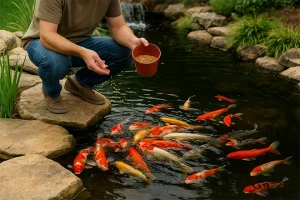
Maintaining a koi pond in Morganton, NC, involves regular tasks to ensure a healthy and beautiful environment for your fish. By following these daily, weekly, and monthly tasks, you can avoid major issues and keep your pond in top condition.
Daily Tasks
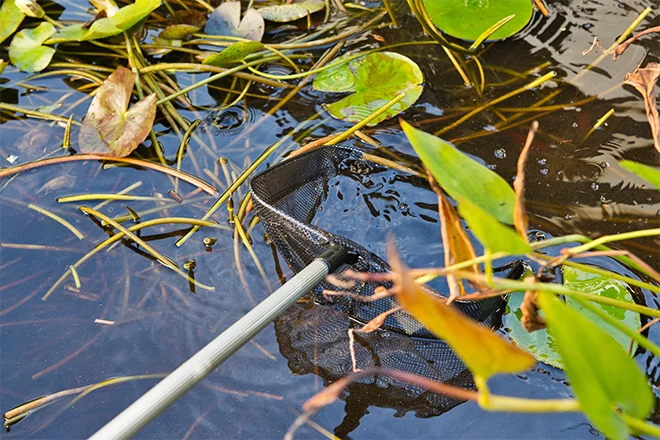
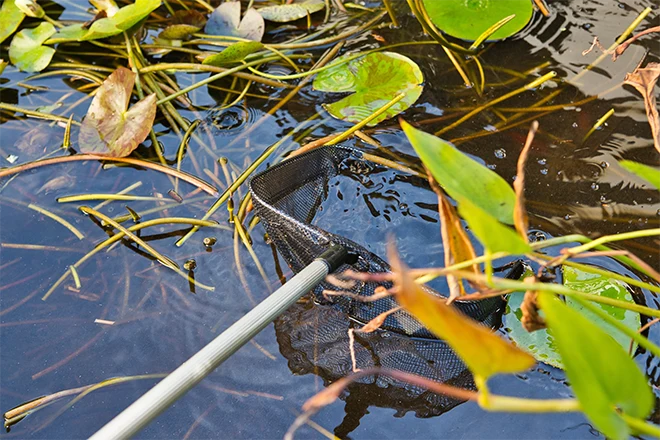
Skim Debris: Using a pond net, remove floating leaves, twigs, and other plant debris from the pond’s surface daily.
Check Fish Health: Observe your pond fish daily for signs of stress or illness. Look for unusual behavior, spots, or changes in appearance.
Monitor Water Levels: Ensure the pond water level remains consistent. Top up the pond with dechlorinated tap water if necessary.
Weekly Tasks
Clean Filters and Skimmers Weekly cleaning of the pond filter and pond skimmer is essential. Remove and rinse out filter pads and skimmer baskets to prevent clogs and maintain proper filtration.
Trim Plants Regularly trim overgrown pond plants and remove dead plant material. This prevents decay and helps maintain a balanced ecosystem. Trimming also encourages the healthy growth of aquatic plants.
Check Equipment Ensure that all pond equipment, such as the pond pump and aerators, are functioning correctly. Address any minor issues before they become major problems. Properly maintained equipment supports good water flow and helps avoid excessive algae growth.
Monthly Tasks
Add Beneficial Bacteria: Add biodegradable bacteria packs monthly to break down organic waste and improve water clarity.
Inspect and Clean Pump: Monthly inspection and cleaning of the pond pump ensures optimal water circulation. Remove any debris from the pump to prevent damage and maintain effective water flow.
Test Water Quality: Regularly test the pond water for pH, ammonia, nitrite, and nitrate levels. Make necessary adjustments based on the test results to maintain a healthy environment for fish and plants.
Rake Pond Bottom: Use a pond rake to remove algae, muck, and debris from the bottom of the pond.
Seasonal Adjustments
Spring And Summer
Increase the frequency of debris removal and water quality testing during the warmer months. Ensure adequate aeration to prevent excessive algae growth and stress on the fish. Regularly check the pond’s volume and adjust maintenance tasks as needed.
Fall
Remove fallen leaves from the pond and prepare it for winter. Consider adding netting over the pond to prevent leaf accumulation.
Winter
Monitor ice formation on the pond and ensure aeration continues to maintain dissolved oxygen levels. Avoid disturbing hibernating fish and plants to keep your pond’s ecosystem balanced during the colder months.
Keep Your Pond A Paradise With Morganton Ponds & Hardscapes
Morganton Ponds & Hardscapes can handle all your pond cleaning and maintenance needs, ensuring a pristine and healthy environment for your aquatic friends. With expert care and attention to detail, they make maintaining your pond in Morganton, NC, effortless and effective.
Ready to give your pond the care it deserves? Fill out our contact form today, or give us a call to schedule your pond cleaning and maintenance service.