How Straw Sets the Stage for Cleaner Water
Have you ever wondered why some ponds stay beautifully clear while others struggle with green water and constant algae problems? Did you know barley straw can help stabilize pond water the same way slow-moving stretches along the Catawba River Greenway keep themselves balanced?
In this post, you’ll learn how barley straw works, how much to use, when to apply it, and what pond owners can expect when using barley bales or barley extract for algae control.
By the end, you’ll know how to use barley straw pond treatment as part of your pond maintenance.
What Barley Straw Pond Treatment Does
Barley straw doesn’t kill existing algae—it gradually prevents new growth by releasing natural compounds as it decomposes. Safe for fish, plants, pets, and wildlife, it offers long-term algae control for up to 6 months when applied correctly. It’s a gentle, non-toxic way to help ponds stay clear.
How Barley Straw Works
The Chemical Process Behind Barley Straw
Barley straw works through a natural decomposition process.
As the straw breaks apart near the surface of the pond water, sunlight and oxygen react with the straw fibers and begin releasing compounds that help inhibit algae growth.
Even though the exact mechanism is still unclear in aquatic plant management studies, many believe mild hydrogen peroxide–like byproducts and increased beneficial bacteria activity contribute to the effect.
Rather than offering instant results, barley straw encourages a slow but steady improvement, similar to the gentle clearing of water you might see along the quiet edges of Bass Lake in Blowing Rock.
Natural vs. chemical algae control.
What Barley Straw Affects and Does Not Affect
Using barley straw won’t kill existing algae or remove mats of string algae already floating in the pond.
It also does not suppress other aquatic plants.
In fact, as the growth of algae decreases, other aquatic plants may become more vigorous because there is less competition for nutrients.
Since barley straw is not registered with the Environmental Protection Agency as a pesticide, barley bales and pellets cannot claim to eliminate algae.
Still, many ponds around Morganton benefit from the way barley straw works naturally without harming fish, plants, or wildlife.
What do pros do to help maintain pond clarity and health?
When to Apply Barley Straw
Best Seasonal Timing
Barley straw is most effective when applied before algae growth begins.
Fall through early spring is ideal, since the straw needs time—weeks, in many cases—to break down and begin releasing helpful compounds.
When pond water is below 50°F, activation may take 6 to 8 weeks.
When temperatures rise above 70°F, activation may take as little as 1 to 2 weeks.
Timing barley straw with seasonal changes feels similar to watching Pisgah National Forest shift from winter stillness to early spring movement.
Duration of Effectiveness
Once activated, barley bales typically remain effective for about 6 months.
Pond owners often overlap applications by adding a new bale a month before removing the old one.
This helps maintain water clarity during spring and summer, when algae bloom conditions can intensify.
How Much Barley Straw to Use
Recommended Application Rates
For large ponds, the recommended application is 2 to 3 bales per surface acre, which equals about 10–25 grams of straw per square meter.
Ponds with a history of heavy algae growth or nutrient buildup may need 2 to 3 times the initial dose.
However, applying too much straw can reduce oxygen levels as it decomposes, which may cause harmful conditions for fish and other aquatic life.
Small Pond and Water Garden Rates
For small ponds, packaged barley straw bales make dosing easier.
A half-pound straw bale treats up to 3,000 gallons, while a one-pound straw bale treats up to 5,000 gallons.
These small bales work well for backyard ponds, water gardens, and ponds with bottom drains, waterfalls, and ornamental plants.
Barley straw extract offers an even quicker option because it starts working instantly, which is helpful for pond owners who want clear water in a shorter time frame.
Overdosing Risks
Too much barley straw can deoxygenate pond water as it decays, especially during warm weather.
Overdosing will not accelerate improvements and may stress or harm fish.
Follow recommended dosing guidelines to protect aquatic life and reduce the amount of organic waste settling on the pond bottom.
How to Apply Barley Straw
Preparing and Placing the Straw
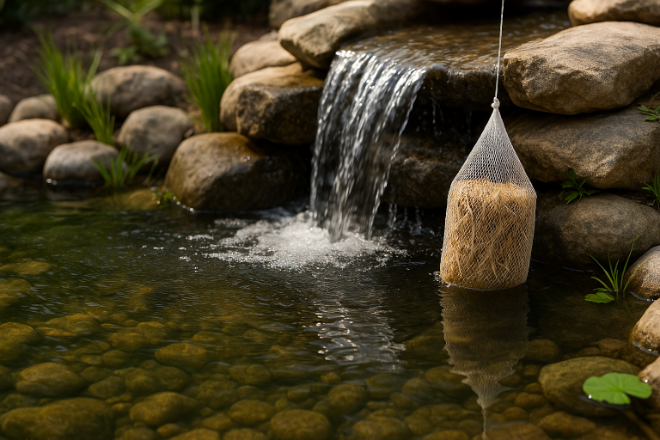
Barley straw should be loosely packed into cages, nets, mesh bags, or nylon stockings.
Keeping the straw near the pond’s surface allows it to receive sunlight and oxygen, both essential for activating the barley straw’s natural compounds.
If the straw bale sinks early, remove it, allow it to dry for about 24 hours, and then float it again.
Positioning in the Pond
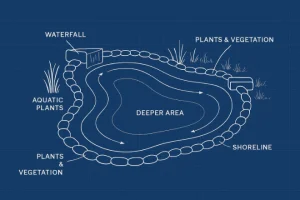
Space barley bales around the pond, especially near areas of moving water like waterfalls, stream inlets, or circulating pumps.
Good movement helps spread the compounds released during decomposition.
In smaller, calm ponds, placing straw in multiple locations improves overall coverage.
Placement Conditions for Best Results
Sunlight and oxygen exposure are key.
Place the straw where it stays afloat and receives natural light.
Larger ponds with open edges, like the broad open spaces around Catawba Meadows Park, benefit from placing the straw where surface circulation naturally occurs.
How Long Does Barley Straw Take to Work?
Depending on pond temperature, barley straw may take 1 to 8 weeks to activate.
If algae is already present, it may take up to 30 days to notice improvements.
Because barley straw does not kill existing algae, pond owners should expect gradual changes rather than instant results.
Often, the shift toward clear water mirrors how visibility slowly improves on foggy mornings at Price Lake.
How else can you clean pond water?
Where to Get Barley Straw
Local Supply Options
Barley straw is not always stocked year-round, so availability varies.
Farm supply stores, conservation agencies, and agricultural offices can help locate barley bales—especially full-size bales that provide a good price for larger ponds.
Online Purchasing Options
Online retailers sell packaged barley straw bales, barley straw extract, barley pellets, and bottled extract for small ponds.
Although these options may cost more per pound, they offer convenience, clear product details, and easy dosing for ponds with complex layouts.
Limitations and Considerations of Barley Straw in Ponds
Not a Rapid Algae-Killing Solution
Barley straw is not an algaecide, and it cannot kill existing algae immediately.
Instead, it helps prevent the growth of algae over time.
It is more about long-term balance than rapid cleanup, which makes it safer for aquatic life but slower to show results.
Variation in Effectiveness
Results can vary depending on sunlight, nutrients, water circulation, and temperature.
String algae may not respond as consistently as planktonic algae.
Even natural ponds, like those located near natural features like Bakers Mountain Park, can behave very differently depending on water chemistry and runoff.
Possible Increases in Plant Growth
Since barley straw affects algae without harming other aquatic plants, some plants may grow more vigorously once algae competition decreases.
This natural shift usually balances out over time as beneficial bacteria stabilize nutrients and reduce algae-fueling ammonia.
Your complete pond maintenance guide.
Fresh Water, Clear Results with Morganton Ponds & Hardscapes
At Morganton Ponds & Hardscapes, we specialize in pond services designed to keep your water features looking as pristine as a mountain-fed lake at sunrise. If you have a problem with pond clarity or overall health, we’ve got the expertise to turn it around.
If you’re ready to ditch slimy green water and enjoy a clean, healthy pond environment for fish, plants, and wildlife, fill out our contact form today or give us a call.