Shell-ebrate Your Pond Life
Ever thought about adding turtles to your pond, but are unsure which species thrives best? Wondering how to set up a turtle-friendly space that keeps both the reptiles and your pond healthy?
In this post, you’ll discover the best turtle species for ponds, how to design the right habitat, and what it takes to keep them thriving year-round.
By the end, you’ll know how to create a pond environment where turtles, fish, and plants can coexist beautifully against the backdrop of the Blue Ridge Mountains, just as you’d see near Morganton’s scenic trails.
Best Turtles for Ponds
| Turtle Species | Description |
|---|---|
| Common Map Turtle | Grows 5–7 inches, prefers calm water at 72–77°F, and enjoys basking in the sun on logs or rocks. |
| Yellow-Belly Slider | Reaches up to 11 inches, known for yellow stripes, active swimmers that thrive with aquatic plants and hiding spots. |
| Box Turtle | Semi-aquatic turtle that needs both pond access and surrounding land for basking and nesting. |
| Painted Turtle | Also called Chrysemys picta, grows up to 8 inches, is marked with black spots and red/yellow patterns, and loves basking. |
| African Sideneck Turtle | Averages about 6 inches, is fully aquatic, prefers warm water, and pulls its head sideways into its shell for protection. |
| European Pond Terrapin | Grows 9–12 inches, can live up to 45 years, thrives in ponds with aquatic vegetation and basking areas. |
| Red-Eared Slider | Popular pond turtle about 8 inches long, easily identified by the red mark near its head, adaptable and hardy. |
| Spotted Turtle | A small turtle under 6 inches with black spots on its shell; it enjoys shallow pond areas and semi-aquatic habitats. |
| Eastern Mud Turtle | Rarely over 4 inches, prefers muddy bottoms, and becomes inactive during colder months. |
| Musk Turtle | Grows 5–7 inches, lives up to 60 years, and often walks along pond bottoms rather than basking. |
| Bog Turtle | Tiny turtle around 4 inches, thrives in shallow ponds with vegetation, often nests near pond edges. |
| Western Pond Turtle | Measures 6–8 inches, found in rivers and lakes, and enjoys slow-moving water with aquatic vegetation. |
| Cooter Turtle | A large turtle up to 20 inches needs a big pond with room to swim and aquatic plants for cover. |
| Wood Turtle | A medium-sized turtle, around 6 inches, spends time on both land and water, easily recognized by its textured shell. |
| Mud Turtle | Small, hardy turtles, usually under 6 inches, spend much of their time walking along pond bottoms or near shore. |
Common Map Turtle
This turtle grows to about 5 to 7 inches in length and does best in water temperatures around 72 to 77 degrees. It has an upper shell marked with fine patterns that make it stand out among other species.
A common map turtle enjoys swimming but also benefits from basking opportunities in the sun. They are a manageable size for most outdoor pond setups.
Yellow-Belly Slider
Yellow-bellied sliders can reach up to 11 inches, and their yellow stripes along the head and legs are easy to spot. They like water temperatures between 72 and 79 degrees.
These turtles need aquatic plants, logs, and rocks for resting and hiding. They are active swimmers and make good candidates for backyard pond environments if given enough space.
Box Turtle
Although they are not entirely aquatic, box turtles can live well near ponds with enough land space around the water. They thrive in warmer areas and need places to nest and hide to avoid predators.
With their dome-shaped top shell and ability to walk both on land and in shallow water, they give ponds a nice balance of land and aquatic life.
Painted Turtle
The painted turtle, also known by its scientific name Chrysemys picta, is one of the most recognizable pond turtles thanks to its black spots, red markings, and yellow lines.
Adults reach up to 8 inches in length. These turtles bask often, usually on logs or rocks near the water’s edge, and require steady access to sunlight to regulate their body temperatures.
African Sideneck Turtle
These turtles average about 6 inches in size and are known for pulling their head sideways into their shell rather than straight back. They are fully aquatic and do best when they have steady warmth and access to clean water.
Because they come from warmer regions, they are less tolerant of cold water and may need special care in the winter.
European Pond Terrapin
This turtle grows between 9 and 12 inches and can live for as long as 45 years. They enjoy a mix of aquatic vegetation and basking areas.
As long-lived animals, they require a suitable habitat that will not only protect them from predators but also give them enough resources for decades.
Red-Eared Slider
One of the most popular pond turtles, the red-eared slider, averages about 8 inches as an adult. With its trademark red marking near the head, it is often chosen for outdoor ponds.
They are strong swimmers, frequent baskers, and adaptable. Red-eared sliders do well if there are both deep and shallow water zones along with aquatic vegetation for cover, much like the layered aquatic habitats near Blowing Rock’s streams.
Spotted Turtle
This small turtle only grows to about 6 inches at most. It is easy to identify because of the black spots scattered across its shell.
The spotted turtle is semi-aquatic, meaning it splits its time between land and water. They enjoy shallow areas in ponds where they can swim without expending too much energy.
Eastern Mud Turtle
These turtles rarely exceed 4 inches and tend to remain inactive during colder months. They are often found at the bottom of ponds or hiding in the mud.
Eastern mud turtles can live in outdoor pond environments as long as there is enough sand or mud at the bottom for them to burrow into when needed.
Musk Turtle
Musk turtles typically measure between 5 and 7 inches and can live as long as 60 years.
They are known as bottom-dwelling turtles, spending a significant portion of their lives walking along the ground of ponds rather than basking often.
With a preference for hiding and a long lifespan, they make interesting additions for patient pond keepers.
Bog Turtle
At about 4 inches fully grown, bog turtles are among the smallest turtles you can keep in a turtle pond. They do well in shallow water with abundant vegetation.
These threatened turtles are not always easy to find, but they are fascinating to watch when they nest along pond edges.
Western Pond Turtle
The western pond turtle reaches 6 to 8 inches in length and is found in rivers and lakes across Oregon and other western states. They prefer aquatic vegetation and slow-moving water.
This species requires both basking spots and deep zones to swim freely, making it a flexible but still wild-leaning choice for a backyard pond.
Cooter Turtle
Cooter turtles are among the largest, sometimes reaching 20 inches. They need large ponds with plenty of aquatic plants and space to swim.
Because of their size, they may not be practical for smaller backyard pond environments, but in a large turtle pond, they can be the stars of the aquatic habitats.
Wood Turtle
Wood turtles grow to about 6 inches and often have a sculpted top shell with interesting textures. They like to spend time on land as well as in water, making them versatile.
Wood turtles need both basking areas and shaded vegetation, a balance that mirrors the dappled forest clearings of Pisgah National Forest. With a varied diet of insects and plants, they can adapt to many pond environments.
Mud Turtle
Mud turtles are small, rarely more than 6 inches. They spend a lot of time walking along the pond bottom or staying near shore.
They enjoy shallow spots with sand and mud where they can nest or bury themselves. Although not flashy, mud turtles are hardy and reliable choices for an outdoor pond.
Best fish types for your pond.
Turtles That Would Do Well in Asheville Ponds
- Common Map Turtle
- Yellow-Belly Slider
- Box Turtle
- Painted Turtle
- Spotted Turtle
- Eastern Mud Turtle
- Mud Turtle
- Musk Turtle
- Bog Turtle
- Western Pond Turtle
- Wood Turtle
Turtles That Would NOT Do Well in Asheville Ponds
- African Sideneck Turtle
- European Pond Terrapin
- Red-Eared Slider
- Cooter Turtle
Pond Design and Construction for Turtles
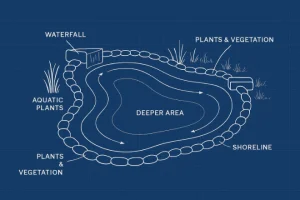
A good turtle pond should have calm water, shallow and deep zones, and plenty of basking and nesting areas. Depths of 12 to 24 inches work well, with gravel or sand bottoms for stability and egg laying. Sturdy liners prevent damage from claws, while logs, rocks, and beaches give turtles safe spots to climb out and bask in the sun.
It’s very similar to how to build a koi pond.
Climate and Seasonal Care for Pond Turtles
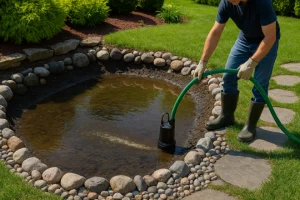
Turtles respond to changing seasons, and some need indoor care during winter. In colder areas, bringing species like red-eared sliders inside keeps them healthy, while outdoor ponds require heaters or aerators when water temperatures drop below 50 degrees. In spring, draining and refreshing the pond prepares it for an active season.
Pond Turtle Feeding and Diet
Pond turtles are omnivores that eat aquatic plants, insects, worms, and pellets. Feeding once or twice a day provides balanced nutrition without polluting the water, and fish help clean up leftovers to keep the pond healthy.
Turtle and Fish Interactions
Turtles can injure or eat smaller fish, so larger koi or other big species are safer companions. A bigger pond with good filtration, plus regular feeding, helps reduce risks and makes cohabitation smoother.
Plant and Habitat Considerations for Pond Turtles
Turtles often trample or eat aquatic vegetation, so hardy plants like water hyacinth or tape grass are better choices. These provide shade, cover, and nesting areas while holding up against turtle activity.
Turtle Predators and Safety
Raccoons, frogs, birds, and large fish are common predators that threaten turtles when they bask or lay eggs. Adding vegetation, rocks, and logs creates hiding sites and keeps turtles protected in a more natural environment, echoing the sheltered spots turtles would use along the shaded banks near Grandfather Mountain.
Create Turtle-Friendly Waters with Morganton Ponds & Hardscapes
Morganton Ponds & Hardscapes knows how to design outdoor pond environments where turtles can thrive alongside fish, plants, and people. With expertise in pond building, habitat planning, and hardscaping, they provide homeowners with a suitable habitat that balances beauty and function.
Your pond deserves to be both a safe place for turtles and a stunning feature for your home. To get started, fill out our contact form today or give us a call.