How to Maintain Your Pond’s Perfection
Ever looked at your pond and wondered if it’s more of a murky mystery than a serene sanctuary? Want to know what you can do to make it clean and clear and keep it that way?
This post will guide you through the essentials of backyard pond maintenance, revealing how to keep your water clear, your fish happy, and your plants flourishing.
By the end, you’ll understand the basics of creating a balanced pond ecosystem and enjoy the peace of mind that comes with pond maintenance.
How To Do Backyard Pond Maintenance
Perform backyard pond maintenance by draining the pond, removing algae and sludge, cleaning filters, checking equipment, and trimming plants. Refill the pond, add beneficial bacteria, adjust water chemistry, and acclimate fish before returning them. A final inspection ensures optimal water clarity and system function.
- Assess the Pond: Start with a thorough assessment to identify issues with water quality, algae, and the overall ecosystem.
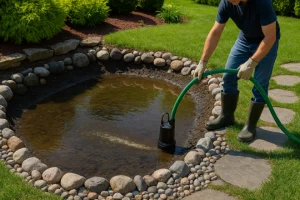
- Drain the Water: Partially or fully drain the pond to access the bottom and sides for cleaning.
- Remove Algae: Manually remove algae buildup from the pond’s surfaces and from any water features.
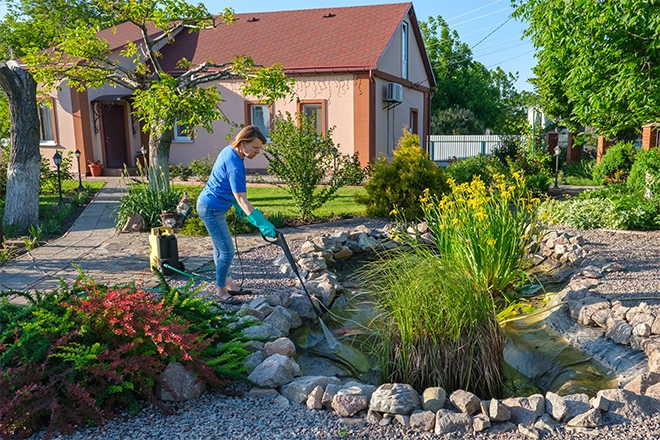
- Clean the Sludge: Using specialized vacuums, remove sludge and debris from the bottom.
- Reposition Rocks and Gravel: Reposition rocks and gravel or add as necessary to enhance aesthetics and support beneficial bacteria.
- Inspect and Clean the Filter System: The filtration system is inspected, cleaned, or replaced to ensure efficient water cleaning.
- Check and Repair Equipment: All equipment, including pumps and aerators, is checked for functionality and repaired if necessary.
- Trim and Manage Pond Plants: Overgrown or dead aquatic plants are trimmed or removed to balance the pond environment.
- Refill the Pond: The pond is carefully refilled with water, adjusting for temperature and chlorine levels.
- Add Beneficial Bacteria: To kickstart the ecosystem, beneficial bacteria are introduced to the water.
- Balance Water Chemistry: The water chemistry is adjusted to the ideal levels for fish and plants.
- Acclimate and Return Fish: Fish are acclimated to the new water conditions before being returned to the pond.
- Final Inspection: A final inspection ensures the pond system operates smoothly and the water is clear.
How much can the pond cleaning process cost?
DIY Pond Maintenance Tips
Water Quality Management
For pond owners, maintaining pond water quality is essential.
Regular testing of pond water pH levels, ammonia, nitrates, and oxygen levels helps keep the water healthy for fish and plants.
Adjustments can be made using over-the-counter products to ensure the pond water remains balanced.
Implementing a proper filtration system, including both mechanical and biological filters, is crucial to removing debris and managing waste effectively.
How can you keep your pond water clean and clear?
Algae Control
Controlling algae growth is a common challenge for pond owners.
In North Carolina’s sunny summers, algae can proliferate quickly—especially during stretches of heat like those often felt around the Lake Hickory shoreline.
Part of home pond maintenance is the manual removal of visible algae. The use of eco-friendly pond water treatments can keep algae at bay without harming aquatic life.
Introducing beneficial bacteria into the pond also helps reduce algae by consuming excess nutrients in the water.
Fish Care and Population Control
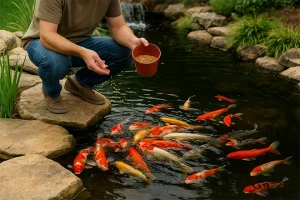
Feeding fish properly is vital to avoid overpopulation and excessive fish waste.
Pond owners should feed fish only as much as they can consume in a few minutes and avoid overfeeding to prevent uneaten food from decaying in the pond.
It’s also important to maintain appropriate fish populations for the pond’s size to ensure a healthy aquatic environment.
Aquatic Plant Care
NC local aquatic plants not only beautify the pond but also play a significant role in the ecosystem by providing oxygen and filtering pollutants.
Selecting the right aquatic plants that thrive in our climate is essential, from hardy lilies that echo the blooms seen at Asheville’s Biltmore gardens to native rushes that flourish in mountain-fed streams.
Pruning overgrown plants and removing dead foliage helps maintain cleanliness and prevent oxygen depletion.
The cost of professional pond maintenance is worth not doing it yourself.
What Are Top Tips for Water Conservation in Pond Maintenance?
1. Fix Leaks Quickly
Regularly check your pond liner, plumbing, and connections for leaks. Even small leaks can waste hundreds of gallons over time.
2. Use Native Aquatic Plants
Plants like cattails, water lilies, or pickerelweed reduce evaporation by shading the water and help filter it naturally, lowering the need for frequent water changes.
3. Collect Rainwater for Refills
Set up rain barrels or catchment systems so you can top off your pond with rainwater instead of relying solely on your hose.
4. Limit Evaporation
Provide shade using floating plants or nearby landscaping. In hot climates, even a pergola or partial cover can help reduce evaporation losses.
5. Maintain Proper Filtration
A well-maintained biological and mechanical filter keeps water clean longer, reducing the need for draining and refilling.
6. Practice Smart Cleaning
Instead of fully draining your pond for routine cleanings, use pond vacuums and skimmers to remove debris and sludge while conserving water.
7. Control Algae Naturally
Algae blooms often cause pond owners to replace water unnecessarily. Beneficial bacteria, barley straw, and balanced planting reduce algae without big water changes.
8. Manage Fish Feeding
Overfeeding leads to excess waste and water quality issues, which can force more frequent water changes. Feed fish only what they can eat in a few minutes.
9. Check Water Chemistry Regularly
Testing pH, nitrates, and ammonia helps you correct issues early, preventing drastic fixes like draining large volumes of water.
10. Use a Pond Cover in Fall
A simple net or partial cover helps reduce debris entering the pond, reducing the load on the filters and the amount of work needed for spring cleaning and maintenance.
When to Call in the Professionals for Backyard Pond Maintenance

Home pond maintenance can sometimes require more than just a DIY approach. Recognizing when to seek professional help is key to preserving the health and beauty of your water feature.
Seasonal Pond Maintenance
Backyard pond maintenance varies by season, requiring different tasks throughout the year. Professional pond teams can ensure your pond is at its best ever season.
- In spring, pond owners should focus on cleaning out winter debris and restarting pumps and filters.
- Summer maintenance involves monitoring water levels and quality, especially during extreme heat.
- Preparing the pond for winter in the fall includes removing fallen leaves and reducing feeding as the water temperature drops.
- Winter care involves ensuring the pond doesn’t freeze over completely to prevent toxic gases from being trapped under the ice.
Technical Installations and Repairs
For complex issues like installing or upgrading pumps and filters, professional expertise ensures that your pond operates efficiently.
The correct size pump is crucial for maintaining optimal water flow and oxygen levels, especially in larger ponds or water gardens.
Professionals can also efficiently address leak detection and repair, safeguarding your property against water damage.
Advanced Water Quality Issues
Water quality is the cornerstone of pond health.
When homeowners encounter persistent problems with pond algae or water clarity, it’s time to call in experts.
Professionals employ advanced techniques and products that go beyond what’s available to the average pond owner, ensuring crystal-clear water without harming your pond’s ecosystem.
Backyard Pond Cleaning
Although many pond owners undertake regular backyard pond cleaning, the professional deep cleaning process can rejuvenate a pond, removing sediment, debris, and excess nutrients that contribute to issues like algae growth.
Calling in professionals doesn’t just solve immediate problems; it’s an investment in your pond’s future. Home pond maintenance programs offered by local experts can provide ongoing support, from vegetation control to ensuring the skimmer basket and filter are functioning as they should.
Understanding Your Backyard Pond

A balanced pond ecosystem includes water, filters, aquatic plants, algae, rocks, gravel, and pond animals. Key components for maintaining this balance are:
Water: Essential for the pond’s existence, usually held in place with a liner.
Filtration: Both mechanical (skimmers, filter boxes) and biological (biofalls) filters are necessary to clean the water by removing debris and promoting beneficial bacteria growth.
Aquatic Plants: They absorb excess nutrients, reducing algae growth while providing oxygen and shelter.
Algae: A small amount is beneficial, indicating a healthy pond. Too much, however, requires control measures.
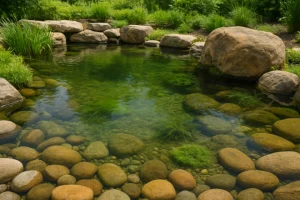
Rocks and Gravel: Offer aesthetic appeal, protect the liner, and support beneficial bacteria.
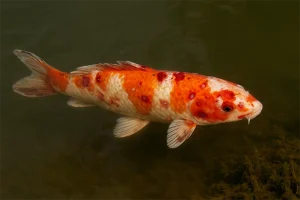
Animals: Koi and other fish add beauty, help control algae, and promote water circulation.
Avoid overstocking fish and plants to prevent issues like murky water and blocked filters. Properly balanced, a pond requires minimal maintenance and remains healthy.
Our guide to backyard koi ponds.
Wash Your Pond Worries Away With Morganton Ponds & Hardscapes
At Morganton Ponds & Hardscapes, we understand the ebb and flow of backyard pond maintenance, ensuring your backyard oasis remains pristine and vibrant through every season. Our team of experts is equipped with the tools and knowledge to tackle anything from routine cleanings to complex ecosystem restorations.
If you’re ready to streamline your pond’s health with professional precision, fill out our contact form today or give us a call – we’re here to make your pond maintenance worries wash away.