Sidestep These Costly Pond Pitfalls
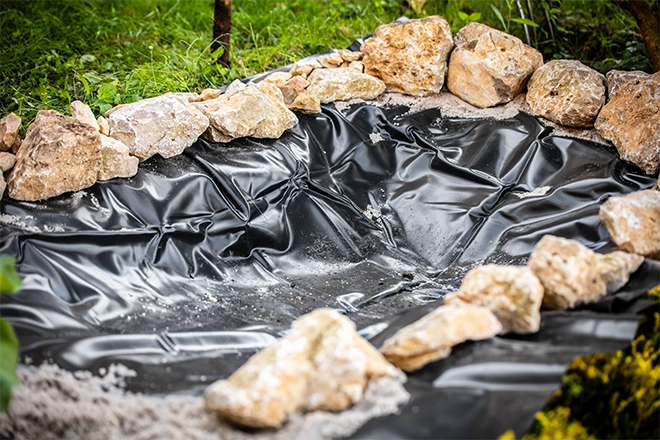
Are you dreaming of turning your backyard into a peaceful oasis with a beautiful pond? Do you want to avoid the headaches that come with common pond-building mistakes?
In this post, you’ll learn about seven major backyard pond mistakes that can ruin your pond project, from poor placement to filtration failures.
By the end, you’ll know exactly what to avoid to ensure your pond building project goes smoothly.
Quick Guide To Avoiding Common Backyard Pond Mistakes
If you’re building a backyard pond and want to avoid costly and time-consuming errors, follow these key tips:
- Choose the right location – avoid low spots and unused corners
- Make the pond deep enough for fish, at least 24 inches
- Include proper ledges for rock stability and plant life
- Ensure proper filtration to maintain water quality
- Plan for adequate size and consider future expansions
Mistake #1 – Poor Location
Building In Low Spots
Placing your pond in a low-lying area may seem logical since water naturally collects there, but it’s one of the worst places for pond construction.
Low spots often experience poor drainage. This leads to water quality issues and pollutant runoff that can harm your fish and plants.
To create your dream pond, you want your pond’s location not to be prone to flooding or heavy runoff.
Hiding The Pond In Unused Areas
It might be tempting to tuck your pond into an unused corner of your property, but a pond project works best when it’s visible and accessible.
You’ll enjoy it more when it’s near patios or seating areas. The proper pond location can turn your outdoor space into a serene oasis. When choosing a spot, ask yourself if you can easily enjoy the sights and sounds of the water feature from your home or garden.
Lack Of Balance Between Sun And Shade
The balance between sun and shade can make all the difference in maintaining a healthy pond ecosystem.
Too much sunlight can overheat the water and promote algae growth. Too much shade may hinder plant growth and make it harder to maintain a balanced environment.
Avoid placing the pond directly under trees to minimize falling debris.
Mistake #2 – Incorrect Pond Size And Depth
Pond Size Too Small
A pond that’s too small may seem easier to manage, but it actually poses more challenges.
Small ponds can quickly become overcrowded with fish and plants, leading to maintenance headaches. Overcrowding can also make it difficult to keep your pond healthy.
Pond Size Too Large
An oversized pond can overwhelm your yard and blow your budget. It’s essential to evaluate the space you have and the vision you want to bring to life without overextending your resources.
Curious about what the average pond size is?
Not Deep Enough
If you end up with a shallow pond (less than 24 inches), it can create problems for your fish.
In colder regions, shallow ponds freeze too quickly. In warmer climates, they can overheat.
It’s also crucial to maintain the right depth to balance the aquatic plants and support the overall health of your pond ecosystem.
You may want to know how to build a pond the best way.
Mistake #3 – Steep Sides And Lack Of Ledges
Steep Sides Make Rock Placement Difficult
Excavating your pond with steep sides might seem efficient, but it leads to instability.
Steep walls make it difficult to place and secure rocks, which can shift over time and cause maintenance problems. Pond contractors often recommend creating gentle slopes with ledges to stabilize rock placement and ensure long-term durability.
Lack Of Ledges For Pond Plants And Rocks
Without ledges, you lose essential planting zones for aquatic vegetation.
Ledges also help stabilize rocks. Rocks are crucial for creating that natural look most homeowners want in their water features.
Mistake #4 – Improper Use Of Rocks And Stones
Using Small Stones
Opting for small, manageable stones might make the construction process easier, but it sacrifices both aesthetics and stability.
Large boulders create a more natural appearance and add structural integrity. Without them, the pond installation may shift over time.
No Rock Layer For Beneficial Bacteria
Rocks and gravel play a critical role in the ecosystem of a pond.
They provide surfaces where beneficial bacteria grow, helping to break down waste and maintain water quality. Without these layers in your pond system, you may face algae blooms and other water quality problems that will increase your need for maintenance services.
Mistake #5 – Lack Of Proper Filtration
Underestimating The Need For Filtration
Many homeowners underestimate the importance of proper filtration.
A well-designed filtration system ensures a successful pond by keeping the water clear and healthy for fish. Whether you’re installing a koi pond or a simple water garden, your filtration setup is crucial.
Using Incompatible Filtration Components
Purchasing piecemeal filtration components can lead to inefficiencies.
Each piece may not work well together, causing water quality issues down the line.
To avoid this, invest in a pond kit or work with a certified aquascape contractor who provides a comprehensive solution. This ensures compatibility and reduces the likelihood of needing additional parts later on.
Mistake #6 – Poor Planning For Construction And Maintenance Access
Lack Of Access For Maintenance
Without proper access to the pond, regular maintenance like cleaning filters or adjusting rocks becomes difficult. Ensure the design includes pathways or areas where you can reach the pond without disturbing the landscape.
Mismanagement Of Excavation Materials
If you don’t plan where to place rocks, gravel, and dirt during excavation, you’ll run into logistical problems during construction. This mismanagement can lead to delays and additional costs.
Mistake #7 – Waterfall And Berm Design Problems
Waterfall Too Large Or Small
A waterfall that’s too large can overwhelm the pond.
One that’s too small might not achieve the desired effect.
The size of the waterfall should complement the overall design of your dream pond and not dominate it.
Improper Berm Size
The berm, or mound behind the waterfall, should be proportional to the pond and property. If it’s too steep or small, it will look unnatural and out of place.
Here’s what else to know before building a pond.
Pond Perfection Is A Stone’s Throw Away With Morganton Ponds & Hardscapes
When it comes to building your dream pond, Morganton Ponds & Hardscapes has the expertise to ensure your project is done right. From choosing the perfect location to installing a reliable filtration system, we’ll create a beautiful, low-maintenance pond that fits your needs.
Ready to turn your backyard into a serene oasis? Fill out our contact form today or give us a call, and let’s get started on your low-maintenance ecosystem pond project in Ann Arbor, MI!