Feeding Frenzy or Fussy Fish? Let’s Talk Koi Chow
Ever wondered if your koi are eating right—or just eating whatever floats their way? Curious which foods keep them colorful, active, and healthy all year long?
In this post, you’ll learn precisely what koi fish eat, how to feed them, and what to avoid.
By the end, you’ll feel confident in giving your pond fish the best nutrition possible while keeping your pond clean, balanced, and beautiful.
What Do Koi Fish Eat?
Koi fish eat algae, insects, seeds, worms, and specially formulated pellets or flakes. In natural environments, they consume both plant and protein-based foods. In backyard ponds, feed koi a mix of commercial food and natural snacks based on their size, activity, and season.
- Algae.
- Insects and insect larvae.
- Worms.
- Seeds.
- Aquatic plants.
- Small crustaceans.
- Commercial koi food (flakes, pellets).
- Human-safe foods (e.g., watermelon, rice, lettuce).
Koi are opportunistic omnivores that will eat almost anything organic and digestible, especially in a natural or ecosystem pond.
Koi-Safe Treats and Foods
Natural and Store-Bought Treats
Koi love the occasional treat that adds variety to their routine.
You can buy freeze-dried options like bloodworms, silkworm pupae, or aquatic plants such as duckweed. These treats mimic what koi fish eat in the wild and can be used to supplement a steady feeding schedule.
They’re especially helpful when your fish need a protein boost during summer or when you want to reward them after cleaning the pond or adjusting their space.
Human Foods Koi Fish Eat
Some human food can be safely added to a koi’s diet as long as it’s cut into small, soft pieces.
Fruits like grapes, oranges, and melons are fun for koi to nibble on at the surface.
Cooked vegetables such as squash or green peas can also be given in moderation.
Koi will eat cooked rice or pasta if it’s unsalted and not too sticky.
These options are best served as an occasional treat rather than a daily meal, since they don’t offer the same complete nutrition as prepared foods made for koi.
Choosing Koi Food Types
Flakes vs. Pellets
Both flakes and pellets are popular koi food choices, but which one is better depends on the fish.
Flakes float easily and are ideal for small koi or younger fish with softer mouths.
Pellets come in a range of sizes and sink rates. Large koi need larger pellets to avoid overeating tiny flakes.
Many pond owners prefer pellet form because it’s easy to portion and helps reduce waste when matched to the right fish size.
Koi Food Ingredients to Look For
Good koi food should support energy, growth, and color—reflecting the same vibrancy seen in the blooming gardens that surround Linville Falls Winery each summer.
Spirulina algae is a favorite for enhancing pigmentation and aiding digestion.
Wheat germ helps boost oxygen flow and blood circulation.
Look for fish food that lists ingredients like fish meal, shrimp meal, or squid meal. These protein sources help koi grow strong and stay vibrant.
Vitamins such as A, C, D, E, and K also contribute to a healthy immune system and better recovery from stress or seasonal changes.
Nutritional Guidelines
Koi need a mix of proteins, fats, and carbohydrates to stay healthy.
Younger koi fish eat more protein to support fast growth.
Adult fish do better with a balanced diet that includes plant matter and fiber.
High-quality koi food is worth the investment because it uses clean, natural ingredients that support long-term health without bloating or residue.
Low-quality food often sinks too fast, creates extra waste, and may even shorten your koi’s lifespan due to poor nutrients or added fillers.
What Not to Feed Koi
Koi will try to eat just about anything, but not all food is good for them.
You should avoid feeding koi foods that are high in carbohydrates, like white bread or corn, which can disrupt their digestive system.
Never offer wild-caught insects, fish, or frogs, since they may carry parasites or bacteria that cause illness.
Pet food made for dogs or cats is also a bad idea. It doesn’t match the nutritional profile that koi need and often includes fillers that can pollute your pond water or cause health problems over time.
For how much koi fish cost, you’ll want to keep them healthy.
Koi Feeding Frequency and Best Practices
How Often to Feed Koi Fish
Feeding frequency depends on your pond’s setup and the time of year—just as the feeding rhythm of native fish shifts with seasonal changes along Beech Mountain Lake.
In warmer months, you can feed koi fish up to four times a day, especially if they are growing or breeding.
In cooler weather, once a day or every other day may be enough.
If you have an ecosystem pond with lots of aquatic plants and insect life, you can feed your fish less often because they’ll find natural snacks on their own.
For most backyard pond owners, feeding twice a day in 5-minute intervals is a safe middle ground.
Fish Feeding Duration
Each feeding session should only last three to five minutes.
That’s usually enough time for koi to grab what they need without wasting food or disrupting the pond’s balance.
If you notice uneaten food floating after five minutes, you’re feeding too much. Consistently overfeeding can lead to poor water quality, algae buildup, and even health problems for your koi.
Keeping meals short and controlled helps protect your fish and the environment they live in.
Don’t forget to clean out that food so it doesn’t decompose and lower the water quality.
Fish Feeding Technique
It’s best to sprinkle food evenly across the water’s surface so all koi can get a bite.
You should avoid dumping food near skimmers or filters, where it can get sucked away before the fish eat it.
Some pond owners even hand-feed their koi to build trust and monitor appetite.
Whether you use floating flakes, slow-sinking pellets, or natural snacks, feeding time is a great chance to check in on your koi’s behavior and make sure they’re active, responsive, and maintaining a healthy weight.
Seasonal Feeding Guidelines for Koi Fish
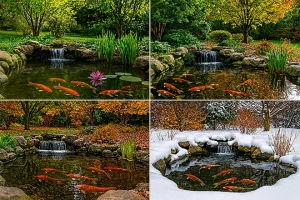
Spring and Fall
Spring and fall are transition seasons for koi, when water temperature fluctuates and their metabolism speeds up or slows down in response.
During these times, koi eat less than they do in summer but still need energy for movement and immune support.
This is when you should feed koi carbohydrate-rich foods like wheat germ-based pellets, which are easy to digest and help them store energy without overworking their system.
Feeding koi food with balanced nutrients in these seasons helps them adjust comfortably to the changing climate and maintain good health going into more extreme temperatures.
Summer
Koi fish grow the most in summer when the water temperature rises, and they become more active.
This is also their breeding season, so their bodies need more fuel than usual.
In this warm-weather window, you can feed your koi up to four times a day with high-protein options such as floating pellets, brine shrimp, or other nutrient-rich fish food.
Protein helps build muscle, supports reproduction, and promotes vibrant color, especially for larger koi.
Just remember to monitor how much they actually eat and keep an eye on water quality since more food means more waste in the pond.
Winter
When temperatures are between 50°F and 65°F, you can switch to cold-weather koi fish food.
When temperatures drop below 50 degrees, koi digestion starts slowing down significantly, meaning they should not be fed.
By the time pond water hits 40 degrees, most koi enter a state of semi-hibernation called torpor.
Feeding koi during this time can harm their digestive tract since their system isn’t active enough to process food.
If you live in a colder climate, plan to gradually reduce feedings in late fall and completely stop when winter arrives.
Environmental and Pond Considerations for Fish Feeding
Water Temperature
The temperature of your pond water directly affects how well koi digest their food.
The best range for digestion is between 50 and 85 degrees.
Below 50, their systems slow down, and they stop eating entirely around 40.
If the water gets too cold or too warm, feeding should be reduced or stopped altogether to avoid stressing their digestive system.
Using a thermometer can help you track when it’s time to change how you feed your koi.
Oxygen and Water Quality
When oxygen levels drop, so does your koi’s ability to digest food.
That’s why you should avoid feeding right before or after a rainstorm, when oxygen is usually lower. Feeding in those conditions can lead to uneaten food sinking and breaking down at the pond bottom, which adds waste and encourages algae.
Clean, well-aerated water helps koi absorb nutrients, move freely, and stay healthy all year round.
Pond Type
An ecosystem pond gives koi access to insects, algae, and aquatic plants that they naturally eat, resembling the rich, balanced habitats found along the Linville River.
If your pond is full of life and organic matter, you can feed your koi less often without sacrificing their nutrition.
Artificial or minimalist ponds, on the other hand, require a more consistent feeding schedule since fish don’t have access to those natural resources.
Automatic Feeders
How They Work
Automatic feeders are handy tools that release a set amount of food at specific times each day.
Most models use dry pellets and let you control how often they feed your koi, which is helpful if you’re traveling or have a busy schedule.
These devices sit at the pond’s edge and can be battery-operated or solar-powered, depending on your setup.
They work best when paired with floating pellets to reduce waste and overfeeding.
Pros and Cons of Automatic Feeders
Pros
- Keeps feeding schedules consistent, even when you’re away.
- Prevents overfeeding with measured portions.
- Encourages a routine that koi can adapt to easily.
- Reduces the chances of forgotten meals during busy days.
Cons
- Limits opportunities for bonding or hand-feeding.
- Can malfunction and over- or under-feed without notice.
- Doesn’t account for weather changes or oxygen levels.
- Still requires monitoring to prevent the buildup of uneaten food.
Our guide to a better backyard koi pond.
Keep Your Fish and Pond Healthy with Morganton Ponds & Hardscapes
A thriving pond starts with clean, clear water and a healthy ecosystem where koi can flourish naturally. Morganton Ponds & Hardscapes provides professional pond maintenance services that keep your water balanced, your filters running smoothly, and your pond looking its best year‑round.
From routine cleaning to long‑term care plans, our team helps ensure your pond stays beautiful, functional, and worry‑free. Fill out our contact form today or give us a call to schedule expert maintenance that keeps your outdoor oasis in perfect harmony.