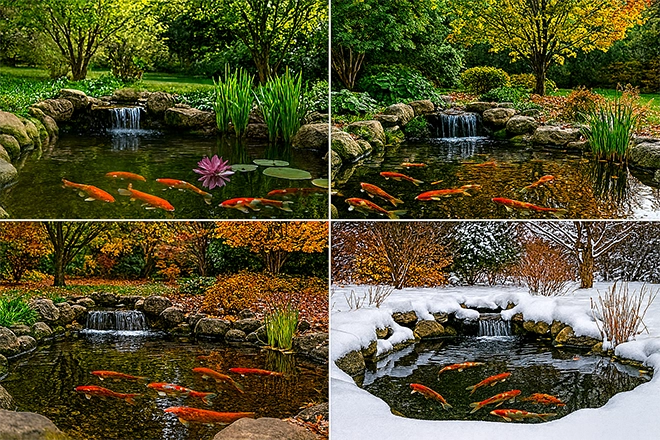
The Art of Year-Round Pond Care
Do you ever wonder why your pond looks amazing in spring but struggles by midsummer? Want to know the simple seasonal habits that keep it crystal-clear and full of life all year?
In this post, you’ll discover how to care for your pond through every season—spring refresh, summer balance, autumn prep, and winter protection—so it always stays healthy and inviting.
By the end, you’ll know how to maintain your pond’s beauty, safeguard your fish and plants, and keep your outdoor space feeling like a peaceful retreat no matter the season.
Seasonal Pond Maintenance Overview
| Season | Key Tasks | Timeframe |
|---|---|---|
| Spring | Deep pond cleaning, test water, restart filtration, and reintroduce plants and fish | March–May |
| Summer | Algae control, monitor oxygen and water clarity, and maintain filtration | June–August |
| Autumn | Remove debris, reduce feeding, and prepare equipment for cold | September–November |
| Winter | Maintain gas exchange, prevent ice seal, and monitor pond health | December–February |
Spring Pond Maintenance
Deep Cleaning and Inspection
Spring cleaning is the perfect time to bring your pond back to life after the colder months—right as dogwoods bloom along the Catawba River Greenway.
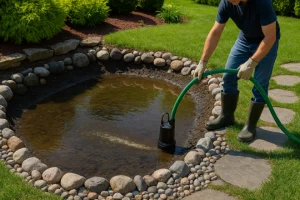
Start by removing any debris that has settled on the surface or bottom of the pond—this includes fallen leaves, fish waste, and other debris that can affect water quality. A pond net or vacuum helps make this task easier.
Once the pond cleaning is complete, gently clean the filter media and pump to ensure good water flow.
Refill the pond with dechlorinated water and check for leaks or cracks around the liner.
Water Quality and Ecosystem Reset
As the weather warms, test your pond water to make sure nutrient levels are stable.
Adding beneficial bacteria is one of the best ways to restore balance to your pond’s ecosystem after winter dormancy. These helpful microorganisms break down excess nutrients and organic waste, which helps control algae and keeps oxygen levels healthy.
Reintroduce aquatic plants like water lilies and floating plants to provide shade and limit algae blooms.
Gradually add your fish back once the water temperature stays consistent above 50°F.
With the right balance of plants, fish, and beneficial bacteria, your pond will quickly return to its natural beauty.
Summer Pond Maintenance
Algae and Water Clarity Management
Summer maintenance keeps your pond clear and cool, much like the shaded streams that run beneath the Blowing Rock trails during July heat.
During warm months, warm water holds less oxygen, so overfeeding fish or letting debris accumulate can quickly cause poor water quality.
Control algae by reducing excess nutrients and cleaning filters regularly. If string algae becomes a problem, you can use UV clarifiers or biological additives to support natural algae control.
Aquatic plants also help by shading the pond and absorbing nutrients that would otherwise feed algae blooms.
Heat and Oxygen Control
When the sun is strongest, keeping oxygen levels steady is crucial for your pond’s health.
A pond aerator, waterfall, or fountain helps keep oxygen moving through the water and prevents fish from gasping near the surface.
Floating plants such as lilies or hyacinths add natural shade that helps lower water temperature and protect aquatic life from stress.
Check your water levels frequently since evaporation can quickly lower them. Refill with tap water that’s been dechlorinated to protect fish and beneficial bacteria.
Autumn Pond Maintenance
Leaf and Debris Removal
As leaves begin to fall, your pond will need extra care to prevent decaying material from clouding the water.
Use a pond net to remove debris before it sinks and turns into sludge. Regular cleaning during this season prevents organic matter from building up and affecting water clarity over the winter.
Trim aquatic plants and prune plants around the edges so they don’t drop extra leaves into the pond.
Preparing Fish and Equipment for Cold Weather
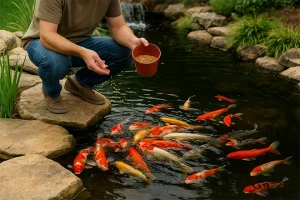
As water temperature cools, reduce feeding gradually since fish need less food and produce less waste.
Once temperatures fall below 50°F, stop feeding entirely to prevent poor water quality through the winter months. Before that, you can use cold water fish food.
Clean and store pumps, filters, or any water features that could freeze.
If you keep your system running, make sure it has good circulation to prevent ice from forming on the surface.
Winter Pond Maintenance
Preventing Ice Damage
During the coldest part of the year—when snow dusts the rooftops along East Union Street—your main goal is to maintain gas exchange so your pond stays healthy under the ice.
Use a pond aerator or small de-icer to keep a hole open in the surface, allowing harmful gases to escape.
Never break the ice by force, as the shock waves can harm your fish.
If your pond is deep enough, most aquatic life will stay near the bottom where the water remains warmer and stable.
Equipment and Energy Management
Winter pond care doesn’t have to mean shutting everything down completely.
Some aeration or circulation is beneficial, but too much water movement can disrupt fish resting areas. Ensure any water circulation happens in the shallow areas where your fish aren’t hibernating.
Turn off nonessential features to save energy, and check that tubing and pumps aren’t frozen.
Monitoring Pond Health During Dormancy
Even when your pond seems quiet, there’s still life beneath the surface.
Occasionally, check water clarity and smell to ensure nothing is decaying excessively. If you notice cloudy water or foul odor, it may be a sign of poor water quality caused by trapped gases or excess organic matter.
Watch your fish from a distance—they should move slowly and remain calm.
How pros like us maintain ponds for clients.
Year-Round Pond Maintenance Essentials
Routine Water Testing and Adjustments
Maintaining good water quality doesn’t stop when one season ends.
Test the water regularly for pH levels, ammonia levels, and nitrate levels to ensure your aquatic ecosystem stays balanced.
Replace small amounts of pond water—around 10% to 20% every few weeks—to dilute nutrients and keep conditions stable.
Vegetation and Ecosystem Control
Aquatic plants play a huge role in your pond’s long-term health.
Regularly prune plants and remove invasive plants to prevent overgrowth.
When properly balanced, aquatic plants help maintain oxygen levels, filter organic waste, and protect your pond’s visual appeal.
Seasonal trimming also reduces the risk of decaying foliage, which can feed algae or throw off your pond’s ecosystem.
Dam and Overflow Maintenance
If your pond includes a dam or spillway, inspecting it seasonally is essential.
Check for erosion or cracks near the base and ensure water flow remains steady through overflow pipes.
Keep vegetation trimmed short around these areas, as deep roots can cause damage.
What’s the cost for pond maintenance?
Common Pond Maintenance Mistakes to Avoid
Overfeeding fish leads to excess nutrients that encourage algae blooms and create poor water quality. Feed only what your fish can consume in a few minutes, and skip feeding when water temperatures drop to prevent waste buildup. Remove any leftover food.
Skipping regular cleaning allows debris and organic matter to accumulate, clogging filters and lowering oxygen levels. Make pond cleaning part of your seasonal routine to remove leaves, sludge, and other debris before they decompose.
Neglecting equipment maintenance can cause pumps, filters, and aerators to wear out faster or stop working altogether. Inspect and gently clean your equipment throughout the year, ensuring water flow remains steady and systems stay in top shape.
Letting your pond freeze over completely is risky; just as Lake Hickory never fully ices thanks to steady movement, your pond needs circulation to stay safe.
Using untreated tap water during refills can harm fish and beneficial bacteria that keep the pond’s ecosystem stable. Always use dechlorinated water or a water conditioner to protect aquatic life and maintain a healthy balance.
Our guide for future backyard pond owners.
Seasons Change, Serenity Stays with Morganton Ponds & Hardscapes
Your pond deserves care that adapts as the seasons turn, keeping water clear, fish healthy, and plants thriving no matter the weather. Morganton Ponds & Hardscapes makes seasonal pond maintenance simple, reliable, and perfectly suited to your outdoor space.
If you’re ready to keep your pond looking its best all year round, fill out our contact form today or give us a call. Let’s bring lasting beauty, balance, and tranquility to your backyard pond.