Key Points
- Concrete pavers, gravel, and brick patios offer strong value for budget-conscious homeowners.
- Natural stone and porcelain are top picks for long-lasting, low-maintenance patio materials.
- The right patio material depends on your climate, design goals, and willingness to maintain it.
Patio Perfect: Finding the Ground That Works for You
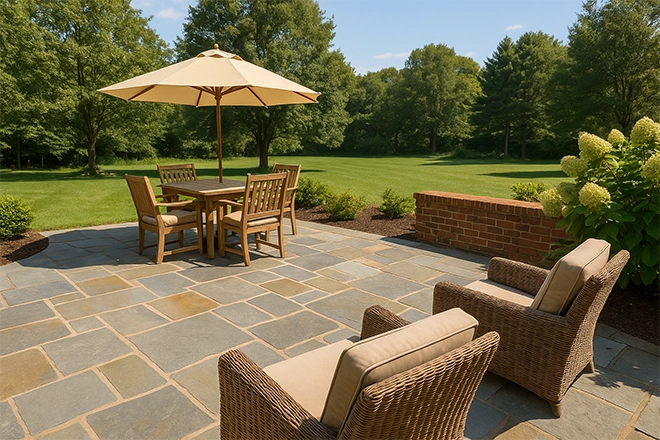
Torn between gravel, stone, or concrete and wondering which patio material actually fits your life? Curious if there’s an option that looks amazing but doesn’t drain your wallet or your weekend time? This post breaks down the pros, cons, and costs of the most popular patio materials, helping you compare them side by side.
By the end, you’ll know exactly which surface fits your patio dreams.
Best Patio Materials
- Gravel – very budget-friendly, great drainage, but shifts over time.
- Concrete – affordable, versatile, but prone to cracking.
- Brick – classic and durable, moderate price, some upkeep required.
- Natural Stone – elegant and long-lasting, but expensive and heavy.
- Porcelain Pavers – sleek and low-maintenance, high cost.
- Bark Chips – natural and soft underfoot, not long-term.
- Wood Decking – warm look, high maintenance.
- Composite Decking – wood-like appearance, low maintenance.
- Ceramic Tile – best in warm, dry climates with good prep.
Gravel
Gravel is one of the best patio materials if you’re trying to keep things simple, perfect for mountain cabins near the Blue Ridge Parkway, where a rustic touch feels right at home.
It’s fast to install, has a low cost per square foot, and gives your outdoor space a relaxed, casual vibe.
It also drains well, making it great for outdoor environments that get heavy rain.
Gravel patios do require occasional upkeep to prevent weeds and shifting. Use edging and a weed barrier under the base material to help it last longer.
It’s not ideal for outdoor furniture that needs a perfectly level surface, but it’s hard to beat in terms of upfront cost.
Concrete
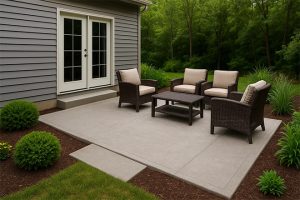
A concrete patio is another cost-effective option that offers tons of flexibility.
You can leave it plain or dress it up with stamped concrete designs to mimic stone or brick pavers.
It’s one of the most common patio materials thanks to its lower costs and wide availability.
The downside? Concrete can crack over time, especially in colder climates. Using control joints and a stable base material during the patio installation process will help reduce cracking.
Concrete Pavers
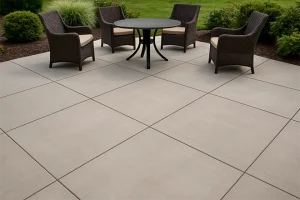
Concrete pavers offer an excellent blend of strength, style, and value.
They’re ideal for high-traffic areas and don’t crack like poured concrete, since each paver is an individual unit. This makes it easy to swap out a single paver without disturbing the whole patio area.
They’re one of the best patio materials for homeowners who want a strong and flexible surface that looks upscale without breaking the bank.
Use permeable concrete pavers if you want an eco-friendly option that helps reduce runoff.
Concrete pavers require very little beyond occasional sweeping and rinsing.
If you use polymeric sand between the joints, it also helps prevent weeds from popping up, reducing ongoing maintenance.
You can even reseal them every few years for extra longevity, but it’s not a must.
Permeable Concrete Pavers
Permeable concrete pavers let rainwater pass through the joints, helping with drainage and reducing runoff. They’re a smart choice for sloped properties or municipalities with strict water control rules.
These pavers also support plant growth and are compatible with more sand and gravel infill, making them both functional and sustainable.
Let’s talk about your concrete patio.
Brick
Brick patios fall in the midrange for both price and performance.
Brick is a tried-and-true choice with a timeless appeal, and using brick pavers in a jack on jack or herringbone pattern adds charm to any outdoor living space.
It’s best to lay bricks over a compacted base of gravel and sand to keep them stable.
While bricks require regular maintenance like sweeping and occasional weeding, they offer a cozy, classic look that works with many architectural styles.
Natural Stone
If your main priority is durability, natural stone is hard to beat.
It’s one of the most durable patio material types out there, resisting damage from moisture, heat, and foot traffic.
Flat slabs of bluestone, slate, or travertine hold up to various weather conditions and offer a high-end finish.
Natural stone does come with a high price tag and usually requires professional installation, but it echoes the rugged elegance you’ll see in places like the Grove Park Inn or Biltmore’s terraces.
But once it’s in place, it needs little more than basic cleaning and can last for decades with proper maintenance.
Porcelain Pavers
Porcelain might surprise you, but it’s one of the most stain-resistant and durable outdoor patio material types available.
These tiles are fired at high temperatures, making them extremely tough and nearly non-porous.
They hold up well in hot or cold weather conditions, and they won’t fade from sunlight.
Though installation can be a bit tricky and the cost is higher than other materials widely used, the result is a sleek, low-maintenance surface built to last.
These pavers are easy to clean with just a garden hose, resist mildew and algae, and don’t require sealing or refinishing.
They also maintain their color over time, even in full sun.
Ceramic Tile
Ceramic tile offers a sleek, modern finish for patios in dry, mild climates.
With a wide range of colors, patterns, and textures, it’s a great choice for homeowners who want to elevate the overall aesthetic of their outdoor living area.
Just make sure to choose tiles rated for outdoor use—they’re designed to handle more foot traffic and weather exposure than indoor varieties.
Because ceramic tile is more porous than porcelain, it isn’t ideal for freeze-thaw regions or patios that stay wet.
It also needs a smooth, properly sloped base to prevent cracking and water pooling.
Ceramic vs. porcelain for the outdoors.
Bark Chips
Bark chips offer a soft, natural feel underfoot, making them ideal for play areas or garden zones.
They don’t hold up well over the long term as a primary patio surface.
Still, they can be a great short-term fix or secondary material to define borders and soften the edge of a larger patio.
Wood Decking
Wood is often used alongside patios to expand outdoor living space, but it’s not always the best material if you’re trying to minimize maintenance.
It needs regular sealing and care to prevent rot, especially in wet climates.
That said, wood adds warmth and visual appeal to your backyard. If you’re okay with a bit of upkeep, it can blend beautifully with other materials.
Composite Decking
Composite decking isn’t technically a patio, but it’s often used to achieve the same purpose in outdoor living.
Made from recycled materials, it’s resistant to insect damage, rot, and mold.
There’s no sealing or sanding required, and it handles various weather conditions with ease.
This material is great for homeowners who want a wood look without the hassle. It can also support outdoor furniture well and gives off a clean, modern vibe for any outdoor living area.
Retaining wall ideas to go with your new patio.
FAQs About Patio Materials
What type of patio material resists cracking and is easy to repair?
Concrete pavers resist cracking because each unit moves independently. Damaged pavers can be replaced without disturbing the rest of the patio. With a solid base, pavers last decades and require little maintenance.
Which patio material drains water naturally and reduces runoff?
Permeable patio materials like gravel and permeable concrete pavers allow water to pass through, reducing runoff. These surfaces improve drainage and help prevent erosion and stormwater buildup.
How can I ensure my patio surface won’t get slick when wet?
Prevent slick surfaces by using textured materials like flagstone, unglazed tile, or textured porcelain. These materials provide a natural grip. Proper installation with slope and drainage further reduces slipperiness.
Pave the Way with Morganton Ponds & Hardscapes
Morganton Ponds & Hardscapes brings expert craftsmanship to patio projects of all sizes across western North Carolina. Whether you’re going for a sleek concrete patio or a rustic flagstone finish, we help you choose the best patio materials to fit your space and lifestyle.
Ready to elevate your outdoor space into something that fits the beauty of a Blue Ridge backdrop or a downtown Asheville garden? Fill out our contact form today or give us a call.