Key Points
- Porches are attached and roofed, while a patio is ground-level and usually uncovered.
- Porches typically cost more but adds charm and curb appeal, while patios offer better ROI due to lower installation costs.
- Both require maintenance, but patios are generally easier to care for and allow more design flexibility.
Porch Perfect or Patio Party?

Thinking about sprucing up your outdoor space but torn between building a porch or a patio? Wondering which one gives you the most bang for your buck, or simply fits your lifestyle better? This post breaks down the key differences between porches and patios, from structure and cost to maintenance and curb appeal.
By the end, you’ll know which option makes the most sense for your home, whether you build a patio or a porch.
Porch vs. Patio
| Feature | Porch | Patio |
|---|---|---|
| Roof | Yes | No (usually) |
| Attachment | Always attached to the house | Usually detached |
| Elevation | Often raised | Built at ground level |
| Cost (avg) | $8,000–$24,000 (200 sq ft) | $750–$7,200 (144 sq ft) |
| Common Uses | Covered entry, lounging, screened | Dining, entertaining, fire pits |
The main difference between a porch and a patio is that a porch is a covered structure attached to the entrance of a house, often elevated and part of the architecture, while a patio is an open outdoor space at ground level, usually paved and located in the backyard or garden.
Structure and Design Differences
What Defines a Porch
A porch is a permanent extension of the house, often seen as a welcoming spot near the front door or an extra relaxing zone near the back.
It’s always covered, either by a roof that’s part of the main home or an attached awning, and may be supported by columns or posts.
Most porches are elevated slightly above ground level and may have steps or railings leading up to them.
Different types of porches include:
- The classic open porch.
- Screened-in porches that provide bug protection during warm months.
- Enclosed porches that feel more like indoor extensions.
All porches help frame the entrance of the house and can add charm, function, and architectural designs that enhance curb appeal.
What Defines a Patio
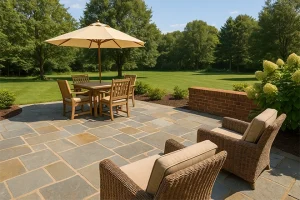
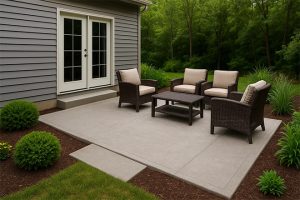
A patio is a paved surface designed for outdoor recreation and entertainment, usually located in the backyard or off to the side of the house.
Unlike a porch, it rarely includes a roof and is built at ground level.
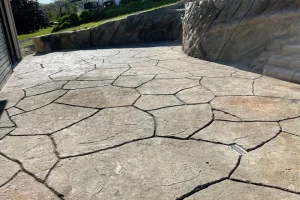
Patios can be made of concrete, pavers, brick, or stone slabs and may be surrounded by landscaping to blend with the rest of the yard.
Most patios are ideal for gathering with friends, grilling, or simply setting up some patio furniture and string lights to enjoy the warm weather.
Since it doesn’t require structural attachment to the house, a patio is a more flexible choice and can be designed in a variety of shapes and layouts.
Cost Comparison
Porch Costs
Building a porch involves structural planning, roofing, and often electrical hookups for lighting or fans.
That means the cost tends to start higher than a patio.
On average, a 200 square foot porch will cost between $8,000 and $24,000, depending on materials, finishes, and whether it’s screened in or enclosed.
Wood framing, composite decking, and custom railings can build up your budget quickly. If you’re also adding walls, windows, or ceiling fans, expect the price to rise even more.
Patio Costs
Patio costs range from $6 to $18 per square foot, meaning a 20×20 patio typically costs between $2,400 and $7,200.
Prices vary depending on materials and installation.
Using pavers, stone slabs, or decorative concrete finishes will increase the total, especially if site grading or drainage is involved.
DIY installation can save money, especially with concrete patios, which are a popular and budget-friendly option in many homes.
Still, professional patio installation ensures a level surface and prevents future cracking or sinking.
How You’ll Use the Space
Porch Use Cases
Porches are perfect for lounging in a shaded space that feels like an extension of your indoor living area.
Many homeowners use them for sipping coffee in the mornings, reading during quiet afternoons, or greeting guests at the front door.
Screened-in porches can double as bug-free zones during warm months while still letting in a breeze.
They’re also ideal if you want to spend time outside without being fully exposed to the sun or rain.
With the right setup, your porch can become a cozy retreat or a semi-outdoor space for entertaining close friends.
Patio Use Cases
Patios are built for fun.
Whether you’re setting up an outdoor dining area to soak in the Blue Ridge views or enjoying fire pits after a Saturday at Lake James, patios give you room to spread out.
Many homeowners choose patios because they’re great for entertaining during summer and can handle heavier patio furniture or grills.
If you want a flexible outdoor area that can handle warm-weather activities like barbecuing or evening hangouts, a patio might fit your lifestyle better.
Add a few landscaping touches and lighting elements, and the space can feel as inviting as your living room.
Patio perfection is right around the corner.
Visual and Curb Appeal
Porches and Front-Facing Value
A porch adds charm to your home’s entrance.
It gives structure to the front of the house and can dramatically boost curb appeal with the right railings, columns, or decorative trim.
In many regions, especially the South, porches are a staple of classic architectural designs.
They also make a home feel more welcoming from the street, especially when paired with greenery or a statement front door.
For homeowners who care about first impressions, a porch does a lot of heavy lifting.
Patios and Backyard Style
Patios shine in the backyard.
They can be shaped around garden beds, set beside pools, or framed with privacy hedges for a retreat-like feel.
Because patios sit at ground level, they offer a smooth transition from your indoor space to the rest of the yard.
They’re also a blank canvas for customizing your outdoor area.
You can switch out patio furniture by season, install water features, or line the edges with stone or lighting for visual interest.
Maintenance and Longevity
Porch Maintenance
A porch requires regular attention, especially if it’s made of wood.
Pressure washing at least once or twice a year helps remove mildew and keep the structure looking fresh.
You’ll also need to repaint, reseal, or repair railings and floors over time, depending on your climate.
Screened-in porches come with extra work during pollen season. Dust, leaves, and grime can build up on screens and furniture, which need to be wiped down to stay clean and functional.
Patio Maintenance
Patios are generally easier to maintain but not maintenance-free.
Most patios need occasional sweeping and pressure washing to clear off dirt and debris.
If you have pavers, weeds may sprout between the gaps unless you use polymeric sand or a sealing agent.
Concrete patios should be inspected annually for cracks or signs of shifting.
Patio furniture should be covered or stored away during the off-season to avoid weather damage.
Return on Investment (ROI) Considerations
Porch ROI
Porches typically cost more to build but can add noticeable value to your home, especially when they enhance curb appeal or increase functional space.
In areas where porches are popular, they can boost resale value by making the home feel more welcoming and well-kept.
If you’re planning to stay in your house for a while and want to build up its charm and usability, a porch is a worthwhile long-term investment.
Patio ROI
Because patios are less expensive to install, they often deliver a higher return on investment as a percentage of cost.
They’re also appealing to a wide range of buyers who value functional outdoor living without a major construction project.
For homes with spacious backyards, patios are a low-risk, high-reward upgrade—perfect for enjoying crisp fall evenings after the Morganton Harvest Festival or spring blooms from nearby rhododendron trails.
When it Comes to Concrete Decisions, Choose Morganton Ponds & Hardscapes
Morganton Ponds & Hardscapes specializes in building patios that blend seamlessly with your landscape and lifestyle. Whether you want a quiet backyard retreat or a wide-open entertainment zone, we can help design and build the perfect patio for your home in western North Carolina.
If you’re ready to transform your outdoor space into something both functional and beautiful, fill out our contact form today or give us a call. Let’s make your dream patio a reality.
FAQs About Patios
What kind of permits do I need for a porch or patio installation?
Permit requirements for porches and patios depend on structure type and local codes. Covered porches with roofing, wiring, or elevation typically need building permits. Ground-level patios often don’t need permits unless they exceed a size limit or are part of a larger remodel.
Which design is better for cold climates where snow is common?
Porches are better for snowy climates because the roof provides cover, preventing snow buildup and easing maintenance. Patios lack protection, allowing snow and ice to accumulate, which increases the need for shoveling and drainage planning.
Can you add a cover or screen to an existing patio later on?
Yes, you can add covers or screens to an existing patio. Homeowners often install pergolas, pavilions, or screen enclosures to improve shade and usability. These additions usually don’t require altering the original slab, but some areas may require permits for structural changes.