Key Points
- Decks are better for uneven yards and elevated spaces, while patios are ideal for flat yards and lower budgets.
- Patios require less maintenance over time and often offer better long-term durability.
- Choosing between the two depends on your yard’s layout, your comfort needs, and how you plan to use the space.
Boardwalks or Brickwork? Let’s Break It Down
Trying to pick between a deck or patio, but not sure which one actually makes sense for your backyard? Wonder what the real difference is and why one costs twice as much as the other? This post breaks down decks and patios side-by-side so you can finally understand how they differ in cost, function, looks, and upkeep.
By the end, you’ll know which one fits your yard, your budget, and your lifestyle without second-guessing your decision.
Deck vs. Patio: What’s the Difference?
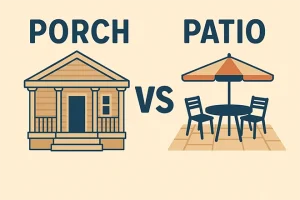
The main difference between a deck and a patio is elevation and construction. A deck is a raised structure made of wood or composite, supported by posts. A patio sits directly on the ground, is built with materials like concrete, stone, or brick, and costs less.
Both can be great additions to your outdoor space, but they serve different functions depending on layout, budget, and personal preference.
Cost Comparison
Average Installation Costs
A patio is almost always cheaper to install than a deck.
On average, patio costs are between $6 and $18 per square foot, depending on materials like stamped concrete or concrete pavers.
A wooddeck can run between $8,000 and $12,000, while a composite deck costs more, often landing in the $12,000 to $18,000 range. If you’re measuring by square foot, decks often cost double what patios do.
Long-Term Investment
Patios offer a better return on investment for smaller budgets because they need less maintenance and last longer with fewer repairs.
However, a well-designed deck—especially a wraparound deck or swimming pool deck—can increase resale value, particularly if it’s part of a larger outdoor living space. Just remember, ongoing care and potential repairs for wooden decks can add up in the long run.
Yard and Terrain Suitability
Sloped or Uneven Yards
If your backyard has uneven terrain or sloped sections, a deck is usually the smarter choice.
A raised deck or ground-level deck can be built to float over uneven ground without the need for heavy excavation.
Decks are also ideal if you want to extend your living space to a second story.
Flat or Level Yards
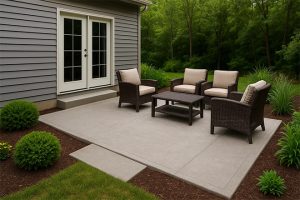
Patios sit naturally on flat ground and require a solid sand base or gravel foundation to keep them stable.
If your yard is already level, a patio is easier and more cost-effective to install.
Concrete or paver patios can be expanded later with fewer structural challenges than a deck.
Let’s talk about how we can fit a patio into your backyard.
Durability and Maintenance
Lifespan
A patio made from concrete or stone is extremely durable and requires minimal upkeep. It can last 30 years or more if installed correctly.
A wooddeck typically has a shorter lifespan and is more vulnerable to weather, moisture, and rot unless made from pressure-treated lumber or composite materials.
Upkeep
Patios are low maintenance—occasional sweeping and power washing usually do the trick.
With decks, you’ll need regular maintenance like staining, sealing, and checking for loose boards.
Composite decks offer a middle ground with less maintenance than natural wood, but they still require cleaning and occasional repairs.
Style and Aesthetic Appeal
Visual Integration
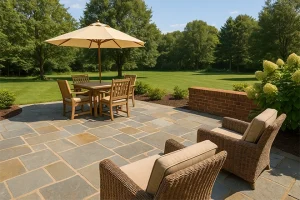
A patio blends into the surrounding landscape and can feel more organic, especially when surrounded by natural materials like plants or garden beds.
Decks tend to feel like an extension of the house, especially if you’re stepping straight from your back door onto the surface.
Customization Options
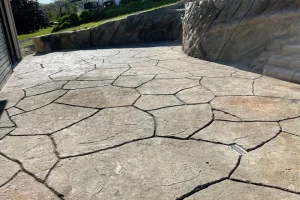
A patio is easily customizable in terms of shape, pattern, and color. You can choose from concrete pavers, stamped concrete, or even natural stone.
A deck is more limited to the shape of the frame, but can still look great with composite decking boards, built-in seating, or lighting features.
Functionality and Use
Weight and Load
Patios are built on the ground, so they can support heavy features like an outdoor kitchen, hot tub, or fire pit.
Decks have weight restrictions and may need added framing for these extras. This makes patios the better choice if you’re planning a high-use entertaining area with large furniture or appliances.
Comfort in Hot Weather
Concrete patios can absorb heat in the summer, especially during those sunny July weekends when Bele Chere Festival weather would have had everything sizzling. Choosing lighter shades or adding shade structures can help.
Composite decks tend to hold less heat than concrete, especially if made with highly durable materials designed for extreme temperatures.
Installation Factors
DIY vs. Professional
A patio is often DIY-friendly if you’re comfortable working with gravel, concrete, or pavers.
Building a new deck is more complicated and usually requires a professional to get it done safely and up to code. That’s especially true for anything elevated or complex, like a ground-level deck with multiple tiers.
Permits and Regulations
Patios don’t always need a building permit, but it depends on your city and how large the space is. It’s worth checking early so you don’t run into issues later.
Decks typically require permits because they involve framing, stairs, and railings.
Resale Value and Home Appeal
ROI and Buyer Preferences
Homeowners looking for a long-term upgrade often find that patios offer a solid return on investment thanks to low maintenance and longevity.
On the flip side, a well-placed deck with composite materials and thoughtful design can be a major selling point for buyers who care about outdoor living space and entertaining friends.
Curb Appeal
Patios add quiet elegance and tend to feel more grounded and peaceful.
A wooden deck or composite deck can become a visual feature, especially when built off the main floor or around a swimming pool.
The choice depends on whether you want a standout platform or a subtle zone that blends into your yard.
Weather Resistance and Climate Fit
Cold or Wet Climates
Patio cracking is a risk in regions with freeze-thaw cycles, especially if water gets under the surface.
Decks can also suffer in wet climates if made from natural wood without proper sealing. Composite decking offers better resistance to water and mold, making it a strong choice in damp regions.
Hot and Sunny Climates
Patios made with lighter materials reflect more light and create less heat overall.
Composite decks are designed for less heat absorption and resist fading in the sun. Wood decks can get hot and splintered over time if they aren’t cared for properly.
Privacy and Noise
Ground-Level Seclusion
Patios offer a more private, tucked-in feel because they sit at ground level and can be surrounded by plants or fencing. They work well for peaceful retreats and cozy seating areas.
Decks, especially raised ones, may feel more exposed unless you build privacy screens.
Elevated Vantage Points
If you want to take in the view or catch a breeze, a raised deck is the way to go.
It gives you a new perspective and can even help you avoid pests that stick to the ground. Just know that elevation might bring more noise and wind exposure, too.
Safety and Accessibility
Family and Mobility Concerns
Patios are naturally safer for small kids, pets, or anyone with mobility concerns, especially on properties where steps could be tricky in rainy Appalachian spring seasons. There are no stairs or railings to deal with.
Decks can be made safe with gates and rails, but require extra planning.
Lighting and Visibility
Both options benefit from added lighting. Patios often use landscape lighting or path lights built into the yard. Decks need lighting along stairs, railings, or built-in posts to stay safe and functional at night.
Environmental and Material Considerations
Sustainable Materials
If eco-friendliness matters, patios made from natural materials or permeable pavers help with drainage and reduce runoff. Composite decks use recycled plastics and wood fibers, making them a sustainable alternative to traditional lumber.
Heat Island Effects
Choosing the right materials can reduce the heat footprint of your outdoor living space.
Lighter patio colors, reflective coatings, and less concrete all help. Composite decks designed for less heat absorption keep things cooler on hot days.
Expansion and Future Additions
Ease of Upgrades
If you want to expand later, patios are easier to add onto—just extend the paved area.
Decks require new framing, supports, and often need to be tied into the existing structure.
This makes patios more flexible for phased projects.
Adding Features
Patios make it easy to add things like a fire pit, water feature, or even a full outdoor kitchen. These elements are heavier and more stable on solid ground.
With decks, you can still add furniture and lighting, but heavier items might need extra support.
Final Considerations to Help You Decide
Choose a patio if your yard is flat, your budget is tight, and you want minimal maintenance for the long haul.
Choose a deck if you’re dealing with uneven ground, prefer elevation, or want a bold outdoor platform for entertaining.
Choose both if you want the best of both worlds!
Either one can be a great investment—it just depends on how you want to live outside.
FAQs About Patios and Decks
What permits are needed for building a deck or patio?
Most decks need a permit, especially if they’re elevated or attached to a house. Permits often require structural plans and inspections. Patios usually don’t need permits unless they include features like kitchens or walls.
Can I combine a deck and patio in the same backyard?
Yes, you can combine a deck and patio to create functional outdoor zones. A raised deck near your home can serve as a lounge or dining area, while a ground-level patio supports heavy features like grills.
How often does a deck need maintenance compared to a patio?
Decks need more maintenance than patios. Wood decks require cleaning and sealing every 1–3 years. Composite decks need annual cleaning and occasional hardware checks. Patios need less upkeep—mainly power washing and resealing every few years. Paver patios may also need new joint sand every five years.
Step Up or Stay Grounded? Talk to Morganton Ponds & Hardscapes
Whether your yard calls for a patio or another hardscape, Morganton Ponds & Hardscapes can help you plan and build the outdoor space that fits your home best. Our team knows how to handle the hills and slopes of western North Carolina and can design a structure that works with your landscape, not against it.
If you’re ready to create a custom outdoor living space, fill out our contact form today or give us a call. We’ll help you take the next step—up or across.