Key Points
- A patio is a ground-level outdoor living space built from materials like concrete, pavers, or stone that adds function and comfort to your backyard.
- Patios differ from decks and porches in structure, elevation, and use, making them a more budget-friendly and flexible option for many homes.
- With the right materials, layout, and maintenance, a patio can boost your home’s value while offering a low-maintenance space for relaxing and entertaining.
Pave the Way to the Perfect Outdoor Space
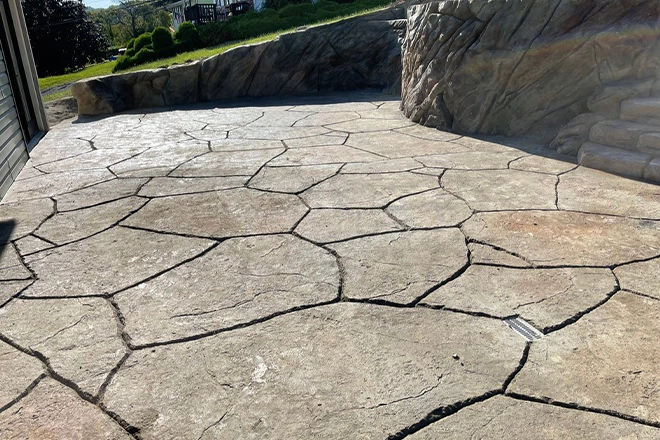
Thinking about creating an outdoor hangout but not sure if a patio is the right fit? Wondering how it stacks up against decks and porches? In this post, you’ll find out exactly what a patio is, how it compares to other outdoor structures, and what makes it worth building.
By the end, you’ll know how to make smart patio decisions that work for your yard, your budget, and your lifestyle.
What Is a Patio?
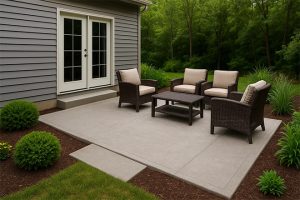
A patio is a ground-level outdoor space typically paved with concrete, stone, or brick. Unlike decks, patios are not attached to the house and usually have no roof. Patios serve as open-air areas for relaxing, dining, or entertaining and can range from small setups to full outdoor living rooms.
Most patios are completely open to the sky, although you can add coverings like umbrellas or pergolas for shade. The word patio comes from the Spanish word for an inner court.
You’ll find patios in all shapes and sizes. Some are simple rectangles in the backyard with room for a grill and a few chairs. Others are full-blown outdoor living spaces with fire pits, patio furniture, and even kitchens.
Whether you’re working with a small patio or building out a larger space, patios are one of the easiest ways to enjoy the kind of outdoor living Western North Carolina is known for.
Key Characteristics of a Patio
Ground-Level Construction
What makes a patio a patio?
It’s the fact that it’s built directly on the ground. No elevation. No steps. It’s a flat surface, typically right outside your back door, but it can be placed anywhere on your property as long as it’s accessible and leveled.
This ground-level setup is ideal for homes with flat yards, but you can still make it work on a slope by building retaining walls or regrading the area.
The lack of height makes it easier to set up furniture, cookout areas, or play zones without safety rails or extra permits.
Material Options
Patios come in more than one style.
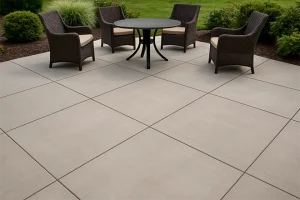
You’ll see everything from poured concrete to interlocking pavers to natural stone or tile. These materials give patios different personalities and fit with a wide range of architectural designs.
Some materials, like pavers and flagstone, let water drain through, helping with runoff.
Others, like concrete, are super durable but might need sealing over time.
What you choose will depend on your budget, your building site, and the look you want.
Design Features
A patio isn’t just a slab.
You can design it to feel like a natural extension of your home.
Add built-in seating, fire pits, outdoor lighting, or even a small garden bed. Want a pizza oven or a full outdoor kitchen? Many people go all-in and treat the patio like a second living room.
Whether it adjoins your exterior wall or floats independently in the courtyard, your patio can become the heart of your recreation time when warm weather hits, like setting up for a summer cookout after a day at Sliding Rock or tubing the French Broad.
Check out these fun patio ideas.
Covered vs. Uncovered Patios
Most patios are open-air, but that doesn’t mean you can’t add coverage.
Shade sails, pergolas, or even retractable awnings can create a cooler, more protected vibe.
Just keep in mind the major difference between a patio and something like a porch or balcony is that a patio doesn’t come with a fixed roof.
Some homeowners also use umbrellas or canopies over their patio furniture to help block the sun during the hottest parts of the day.
Let’s start crafting your patio.
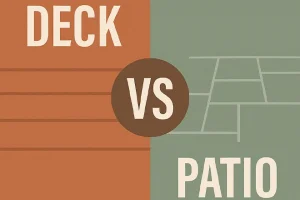
Patio vs. Deck
Elevation and Construction
One of the biggest differences between a patio and a deck is elevation. Patios sit on the ground. Decks are built up, usually a few feet off the ground or higher, and they require posts, joists, and structural framing.
Decks are ideal when your house has a raised foundation or your yard is sloped. But if your space is flat, patios are often quicker and cheaper to build.
How do you build a solid patio?
Cost Differences
In most cases, patios cost less than decks.
That’s because they’re easier to install and don’t need the same structural supports. You’re not dealing with framed lumber, wood preservatives, or the cost of stairs and railings.
Materials like concrete or pavers are usually more budget-friendly than composite decking, and maintenance is less expensive, too.
Maintenance Requirements
A patio might need occasional pressure washing or sealing, depending on the surface, but overall, it’s low effort.
Compare that to a deck, which usually needs staining, resealing, or even replacing boards over time, especially if it’s made from wood.
Fewer exposed surfaces and less height mean fewer chances for rot, warping, or pests.
Aesthetic and Functional Differences
Where patios often feel more grounded and natural, decks stand out as visible features that offer elevated views.
A deck might be the better pick if you want to overlook a view, but a patio is better for blending into the landscape or connecting to other parts of the yard, like a garden path or fire pit.
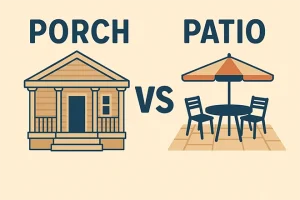
Patio vs. Porch
Structure and Coverage
A porch is always attached to the house, usually at the front door or back entrance, and it comes with a roof. That’s the defining feature.
Patios, on the other hand, are typically detached and roofless.
You can put a patio in the backyard, off to the side, or even in a central courtyard. A porch will always be part of the building footprint and is more protected from the elements.
Functionality
Patios are versatile hangout spots. You can host barbecues, lounge in the sun, or dine outdoors.
Screened-in porches, on the other hand, offer more shelter from bugs and weather and can sometimes even be used year-round if they’re enclosed properly.
If you’re after that open-air freedom with more flexibility in layout, a patio gives you more design freedom.
A porch feels more like an outdoor hallway or foyer, perfect for rocking chairs and coffee sips, but not always as roomy.
Enclosures and Add-ons
A porch can easily be enclosed with screens, windows, or storm panels. You can’t really do that with a patio unless you convert it into a new structure altogether. That said, some people choose to build screened pavilions or pergolas over patios to create a hybrid setup.
For those wanting a balance between openness and protection, a covered patio can offer the best of both without becoming a true porch.
Benefits of Installing a Patio
- Typically costs less to build than a deck or porch.
- Requires fewer materials and less structural work.
- Can be expanded easily over time.
- Offers flexibility for casual or high-end outdoor setups.
- Accommodates everything from basic furniture to full kitchens.
- Perfect for relaxing, entertaining, or everyday use.
- Increases your home’s usable outdoor space.
- Adds resale value and appeals to future buyers.
- Works well with a variety of design styles and furniture types.
Important Site Considerations for Patios
Yard Slope and Terrain
If your yard is flat, you’re in luck; you can build a patio with very little prep.
If it’s sloped or rocky, you might need to bring in fill dirt or add retaining walls to support the layout.
When the terrain’s tricky, a deck might actually be the simpler option.
Drainage and Water Control
A proper patio setup needs to manage water flow.
If rain pools near your house, it could damage the exterior wall or foundation. Grading the area or using permeable pavers helps direct water where it should go.
Always make sure your patio slopes slightly away from the building to keep things dry and safe.
Patio Maintenance and Upkeep
Cleaning and Sealing
Depending on the materials, patios might need an occasional rinse or pressure washing to keep them looking sharp. Sealing can help prevent staining or cracking in concrete or tile surfaces.
Repairs and Wear
Over time, pavers might shift or settle and need to be re-leveled. Concrete can crack with freeze-thaw cycles, but is usually easy to patch.
Furniture and Accessories
Choose weather-resistant furniture that can handle sun, rain, and cold. Patio cushions, rugs, and covers will wear better if you store them or cover them during bad weather or winter.
FAQs About Patios
How thick should the base be for a patio to ensure durability?
A patio base should be 4 to 6 inches thick using compacted gravel or crushed stone for durability under foot traffic. For heavier loads like hot tubs, increase the base to 8 inches or add a reinforced concrete slab to prevent settling and cracking.
Do weeds grow between patio pavers, and how do I keep them out?
Weeds can grow between patio pavers if not properly sealed. Prevent growth by using polymeric sand or a weed-blocking joint compound, then seal the surface to lock gaps and stop seeds from sprouting long-term.
Can I install patio pavers over existing concrete?
Yes, you can install patio pavers over existing concrete if it’s stable. Clean the surface, repair any cracks, and apply a thin layer of mortar or adhesive to secure the pavers and refresh the patio without full removal.
From Dirt to Delight: Morganton Ponds & Hardscapes Builds Beautiful Patios
When you’re ready to bring comfort and character to your outdoor space, Morganton Ponds & Hardscapes can design and install the patio that fits your home and lifestyle. Whether it’s a simple stone layout or a fully featured backyard hangout, we’ve got the tools and expertise to do it right.
To get started on your dream patio, fill out our contact form today or give us a call. Let’s turn that blank yard into your new favorite spot.