Why Pondless Water Features Are a Backyard Game-Changer

Thinking about adding a water feature but not sure if a pond fits your space or lifestyle? Wondering if there’s a way to enjoy the sound of a waterfall without the upkeep of fish or algae?
In this post, you’ll learn what a pondless water feature is, how it works, what it costs, and why so many homeowners are choosing it over traditional ponds.
By the end, you’ll know how to pick the right design for your pondless water feature and feel confident making a choice that’s low-maintenance, family-friendly, and easy to enjoy.
Key Points
- Pondless water features use a hidden underground basin to recirculate water, giving you the look and sound of a waterfall without the maintenance of a pond.
- They’re safer and simpler for families, with no standing water and fewer cleaning chores throughout the year.
- Costs vary widely, but a professionally installed feature usually starts around $8,000, with DIY options available for smaller budgets.
What Is a Pondless Water Feature?
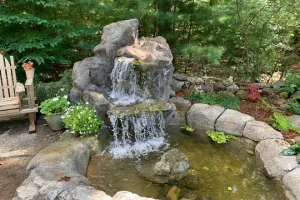
A pondless water feature is a waterfall or stream that flows into a hidden underground reservoir instead of a visible pond. It recirculates water using a pump, offering the soothing sound of flowing water without the maintenance or safety concerns of standing water. It’s ideal for families, pets, and small spaces.
Contact us about your pondless water feature project.
Pros and Cons of a Pondless Backyard Water Feature
Key Benefits
- Safe and family-friendly: No open pond means fewer hazards for kids or pets.
- Low maintenance: No algae buildup, no fish care, and no skimming debris every day.
- Water conservation: These systems reuse water with very little evaporation.
- Fits small yards: Perfect for tight landscape layouts or narrow garden beds.
- Flexible style: You can shape the stream, adjust the waterfall spillway, or add rocks, lighting, or plants for a custom look.
- Lower energy costs: Smaller pumps and shorter run times save electricity over time.
Drawbacks to Consider
- No fish or aquatic plants: Without a pond, there’s no space for koi or lilies.
- Sound quality varies: Some setups may sound more like a trickle than a cascade, depending on your pump and waterfall height.
- Visible mechanics: If not carefully hidden with gravel or decor, the reservoir lid or tubing may show.
- Upfront cost: A custom setup with stonework, elevation changes, and lighting can be as costly as a pond.
How Much Does a Pondless Water Feature Cost?
Standard Package — Starting at $8,000
This is a great entry-level option for homeowners who want the look and feel of a pondless waterfall without a major project.
- Simple design with clean lines.
- A 5-foot stream with a single waterfall.
- Basic patio integration.
Deluxe Package — Starting at $17,000
Perfect if you’re looking for something more eye-catching that blends better with your existing landscape.
- Upgraded material selection.
- A stream up to 12 feet long.
- A more dramatic, dropping waterfall.
Premium Package — Starting at $23,000
This is the top-tier option for those who want a long, layered water feature that acts as a showpiece in the yard.
- Extended stream up to 20 feet.
- Multiple large waterfalls for more sound and movement.
What Affects the Price
- Feature size and length of the stream.
- Quality of rocks, stone, and finishing materials.
- Add-ons like lighting, advanced filtration, or a remote control.
- Local labor rates and site construction challenges.
Pondless water feature ideas you might want to add.
Sneaky Costs to Keep in Mind
- Replacing your pond pump every few years.
- Optional seasonal shutdown services.
- Additional landscaping to blend your feature into your yard.
How to Build a Pondless Waterfall DIY-Style
What You’ll Need
- Waterfall kits or pondless waterfall kits
- A pump, check valve, flexible tubing
- Waterfall spillway or spill box
- Rubber liner and protective underlayment
- Matrix blocks or water matrix for the reservoir
- Rocks, gravel, and decorative plants
- Expanding foam to direct the flow of water
DIY Pondless Waterfall Construction Steps
- Dig your reservoir hole and lay the liner.
- Stack matrix blocks inside and connect tubing to the pump.
- Set up the waterfall spillway or spill box at the top of your planned stream.
- Lay the streambed liner and begin placing your rocks.
- Use foam sealant behind spill stones to direct flowing water properly.
- Fill the reservoir with water, plug in your pump, and adjust your design as needed.
And here’s how to build a backyard stream.
Design Ideas for Backyard Spaces
Tailor It to Your Yard
Whether you want a subtle slope along a patio or a bold centerpiece for your garden, the layout should feel like it belongs. Think about sight lines from your sitting area and how the waterfall might look with nearby plants or lighting.
Add a Natural Touch
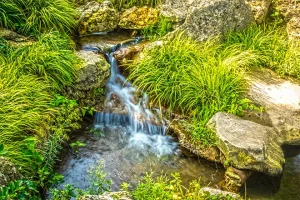
Layer in soft edges using native grasses or low-maintenance perennials. Mix gravel, mossy stones, or driftwood to make your pondless waterfall feel like it was always part of the landscape.
Maximize the Relaxation Factor
Want to really relax? Add low lighting for a glow at night and choose a wide, gentle waterfall design to create that constant trickling water vibe that brings instant tranquility.
Landscaping ideas for around your water feature.
Maintaining a Pondless Water Feature
Regular Care
- Clear leaves or debris from the rocks and gravel surface.
- Check the pump flow monthly and clean the intake if needed.
- Top off water levels during hot months to avoid running dry.
Seasonal Shutdown Tips
In cold climates, unplug and store your pump for winter. You can either drain the system or let it sit dry until spring if it’s not running.
Can You Add a Pond Later?
Yes, one of the biggest benefits of pondless systems is their ability to grow. You can convert a pondless water feature into a full pond later by adjusting the reservoir and expanding the layout.
FAQs About Pondless Water Features
How much water does a pondless waterfall actually use?
A pondless waterfall uses about 100 gallons per hour (GPH) of water flow for each inch of spillway width. For a stronger effect, use 200 GPH per inch. This helps size your pump correctly and ensures smooth, visually pleasing water movement.
Does a pondless waterfall attract mosquitoes?
A pondless waterfall does not attract mosquitoes. The moving water prevents mosquitoes from laying eggs, while also drawing beneficial wildlife like birds and dragonflies to the area.
Can I run my pondless waterfall on a timer?
Yes, you can run a pondless waterfall on a timer. Unlike ponds, these systems don’t need 24/7 circulation. A timer or remote lets you activate the feature when desired, saving energy while maximizing enjoyment.
Go With Less Pond, More Wow With Morganton
Whether you’re dreaming of a calming backyard stream or a bold stone waterfall centerpiece, Morganton Ponds & Hardscapes can help you bring that vision to life. Their pondless water features combine expert design with low-maintenance function, perfect for homes across western North Carolina.
Ready to add beauty, sound, and flow to your outdoor space? Fill out our contact form today or give us a call.