Crafting Beauty in Your Yard
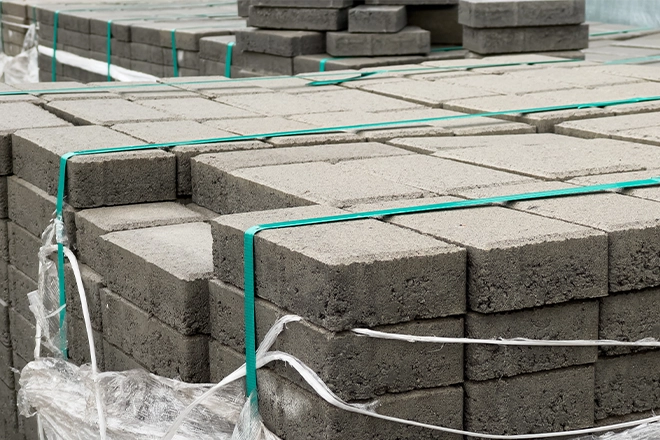
Ever wonder what gives a backyard patio or winding garden path its lasting, polished look? Curious about which materials can handle the weather, heavy use, and still look amazing year after year?
In this post, you’ll get a full breakdown of the most popular hardscape materials—what they are, why they work, and the best ways to use them.
By the end, you’ll be able to confidently choose the right materials to create your hardscape.
List of Hardscape Materials
- Natural stone
- Flagstone
- Fieldstone
- Gravel
- River rock
- Mulch
- Soil
- Wood
- Brick
- Pavers
- Concrete
- Composite decking
- Tile
- Recycled rubber mulch
- Recycled glass
- Pea gravel
Contact us today about your hardscape installation.
1. Natural Stone
Natural stone is one of the most timeless and durable hardscape materials.
Whether you’re using flat stones like slate or rugged boulders, the irregular shapes and textures bring natural beauty to your backyard. It’s a top choice for homeowners who want a more organic look in their landscape design.
Natural stone works well for patios, walkways, retaining walls, and even accent borders around a flower bed or pond.
What other retaining wall materials are there?
Pros:
- Beautiful, natural variation in color and texture
- Extremely durable and weather-resistant
- Enhances curb appeal with long-term value
Cons:
- Heavy and labor-intensive to install
- Higher upfront cost than manufactured materials
- Requires a level base and careful placement
2. Flagstone
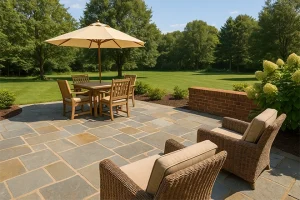
Flagstone is a type of sedimentary stone known for its flat, irregular shape.
These pieces fit together like a puzzle, making them ideal for winding walkways or natural-looking patios. It’s often used in garden settings where subtle textures and earth tones blend well with plants and shrubs.
You’ll commonly see flagstone in outdoor patios, stepping paths, or edging around planters.
Pros:
- Natural slip resistance
- Low maintenance
- Flexible layout options with unique shapes
Cons:
- Can become slick with moss buildup
- More expensive per square foot than concrete pavers
- Uneven surfaces, if not installed carefully
3. Fieldstone
Fieldstone is gathered from the surface of fields and hillsides, giving it a rougher, more irregular look. It’s often used to build freestanding retaining walls or stacked garden borders, where the irregularity adds to the rustic charm.
It’s best for dry-stacked wall systems, garden walls, and naturalized seating areas around fire pits.
Pros:
- Organic, earthy look
- Durable and heavy
- Blends seamlessly with plantings and natural terrain
Cons:
- Requires skill to stack securely
- Can be difficult to source in large quantities
- Shapes may need cutting or adjustment
4. Gravel
Gravel is one of the most practical hardscaping materials for a variety of uses.
It’s great for drainage, easy to spread, and can be used in both casual and formal outdoor spaces. It’s commonly laid over sand or fabric to keep it from shifting and to control weeds.
You’ll often find gravel in driveways, walkways, between concrete pavers, or as a base for patios.
Pros:
- Inexpensive and easy to install
- Allows for excellent drainage
- Comes in a wide range of textures and colors
Cons:
- Can shift without edging
- Needs occasional raking or topping up
- Not ideal for high-heeled shoes or wheeled carts
5. River Rock
River rock consists of smooth, rounded stones worn by water over time.
It’s often used in dry stream beds, around ponds, or to create decorative borders. Its size and polished texture make it more of a visual feature than a walkable surface.
This stone works best around the base of trees, in drainage zones, or between larger landscape elements to soften the look.
Pros:
- Excellent for erosion control
- Adds visual contrast and polish
- Requires little to no maintenance once installed
Cons:
- Can be difficult to walk on
- More expensive than standard gravel
- May shift without proper edging
6. Mulch
Mulch is often thought of as a softscape feature, but it plays a major role in hardscape design too. It’s used to frame hardscape materials, transition between planters and patios, or serve as a clean ground cover in garden beds.
Mulch—especially inorganic mulch like rubber or stone—can also reduce maintenance around concrete slabs and paver paths.
Pros:
- Helps retain soil moisture
- Minimizes weeds
- Comes in many textures and colors
Cons:
- Needs refreshing or replacement over time
- Some types can blow or wash away
- Inorganic mulch doesn’t improve soil
7. Soil
Soil might not be a hardscape material, but it’s a key partner to every project.
Without the right soil, you can’t grade for proper drainage or plant around walkways and patios. Whether you’re building up a flower bed or backfilling around retaining walls, soil helps blend softscape with hardscape.
Use it to contour your yard, create planting beds, or support transitions between other materials.
Pros:
- Supports root growth and drainage
- Affordable and easy to work with
- Helps create smoother transitions in landscape design
Cons:
- May require amendment depending on plant choice
- Can erode if not retained
- Doesn’t serve a decorative purpose on its own
8. Wood
Wood is one of the most classic hardscape materials, especially for elevated outdoor living spaces like decks and pergolas. Its natural texture and color bring warmth and softness to a space dominated by stone and concrete.
Use wood in planter framing, retaining structures, or deck areas that overlook gardens or yards.
Pros:
- Easy to cut and customize
- Pairs well with plants, ponds, and patios
- Available in pressure-treated or composite alternatives
Cons:
- Requires sealing or staining to resist rot
- Prone to warping over time
- May attract insects if untreated
9. Brick
Brick is a classic building block for landscaping.
It’s used in everything from walkways and outdoor patios to fire pits and retaining walls. It’s made from fired clay and offers a warm, traditional look that works well in both formal and relaxed outdoor spaces.
Brick is a go-to option for creating a patio, edging a flower bed, or crafting curved garden paths.
Pros:
- Recyclable and long-lasting
- Creates clean lines and defined shapes
- Withstands freeze-thaw cycles well
Cons:
- Mortar joints may require upkeep
- Can chip or crack under heavy use
- Slightly uneven surfaces if not installed carefully
10. Pavers
Pavers are one of the most versatile hardscape materials.
These manufactured units come in a wide range of sizes, shapes, and colors to fit any landscape design style. They’re especially popular for patios, walkways, and driveways because of how easy they are to install, remove, and replace.
Installing pavers over a compacted sand base allows for flexibility while still maintaining structure.
Pros:
- Easy to replace individual units
- Excellent for DIY projects
- Wide variety of textures, from modern to rustic
Cons:
- Joints can collect weeds or ants
- May shift if the base is not compacted properly
- Can look artificial if not mixed with natural elements
11. Concrete
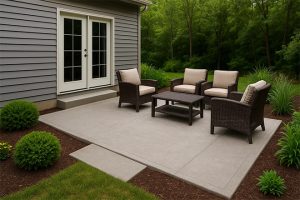
Concrete is one of the most widely used hardscaping materials due to its strength and adaptability.
Whether you’re pouring large concrete slabs or using it as a base for other features, it plays a key role in building solid, long-lasting surfaces. Decorative options, such as stamped concrete and colored finishes, expand your design options even further.
Concrete works great for sidewalks, outdoor patios, concrete slabs under pergolas, and even modern pool decks.
Pros:
- Extremely strong and low maintenance
- Can be molded or textured to mimic other materials
- Cost-effective for large areas
Cons:
- Prone to cracking if not installed correctly
- Can look cold or industrial without added detail
- Repairs are harder to blend with the surrounding slabs
12. Composite Decking
Composite decking is made from recycled materials like plastic and wood fiber.
It’s a popular choice for creating a low-maintenance outdoor living space that still offers the natural look of wood. Unlike traditional timber, composite boards won’t rot, fade, or attract insects.
It’s ideal for backyard decks, pool surrounds, and raised garden structures.
Pros:
- Resistant to moisture, bugs, and UV damage
- Long lifespan with minimal upkeep
- Comes in a variety of colors and textures
Cons:
- Higher initial cost than wood
- Limited refinishing or customization
- Can feel warmer underfoot in full sun
13. Tile
Tile offers a sleek, refined look and is especially useful in outdoor kitchens, covered patios, and pool decks.
You’ll find it in ceramic, porcelain, or even recycled materials made for outdoor use. Slip-resistant finishes are important to keep walkways safe in wet conditions.
Best installed over concrete slabs, tile makes for an elegant finishing touch in hardscape design.
Pros:
- Easy to clean and maintain
- Wide range of colors, shapes, and patterns
- Textured options help prevent slipping
Cons:
- Can crack if the base shifts or freezes
- Not suited for uncovered areas in colder climates
- Glazed tiles may be slippery if wet
14. Recycled Rubber Mulch
Rubber mulch is made from shredded tires, turning waste into a durable landscaping material. It’s commonly used in playgrounds or dog-friendly paths where cushioning and long-term performance matter more than natural looks.
This mulch is a great option for low-maintenance areas where traditional organic mulch breaks down too fast.
Pros:
- Doesn’t rot or attract bugs
- Lasts for years without needing to be replaced
- Helps cushion falls or heavy foot traffic
Cons:
- Retains heat and can get hot in the sun
- Doesn’t improve soil like organic mulch
- Has a strong rubber smell when new
15. Recycled Glass
Recycled glass is crushed, tumbled, and polished into colorful mulch-like chips. It’s used more as a decorative element than a structural one, but it adds a ton of visual interest in garden beds, border zones, or xeriscaping.
Best for low-traffic zones, recycled glass works well in beds without much foot traffic.
Pros:
- Colorful, reflective, and modern
- Sustainable use of recycled materials
- Doesn’t decompose or fade
Cons:
- Not walkable like gravel or pavers
- Can scatter without edging
- Higher cost than organic mulch
16. Pea Gravel
Pea gravel is made of small, smooth, rounded pebbles—about the size of a pea. It’s easy to install, comfortable to walk on, and perfect for soft transitions between planting zones and hardscape areas.
Use pea gravel around fire pits, between stepping stones, or to fill in around larger hardscape products.
Pros:
- Comfortable beneath bare feet
- Great for casual outdoor spaces
- Budget-friendly and DIY-friendly
Cons:
- Spreads easily without containment
- Not ideal for mobility devices
- Needs occasional raking and refilling
Need some hardscaping ideas for your outdoor area?
Rock Your Outdoors with Morganton Ponds & Hardscapes
From patios to retaining walls, Morganton Ponds & Hardscapes brings lasting beauty and expert craftsmanship to outdoor spaces across Western North Carolina. Whether you’re dreaming of a natural stone walkway or a full backyard transformation, our team knows how to turn hardscape materials into standout features.
Ready to build something solid and stunning? Fill out our contact form today or give us a call.