Flow Like A Pro: Crafting Your Perfect Backyard Stream
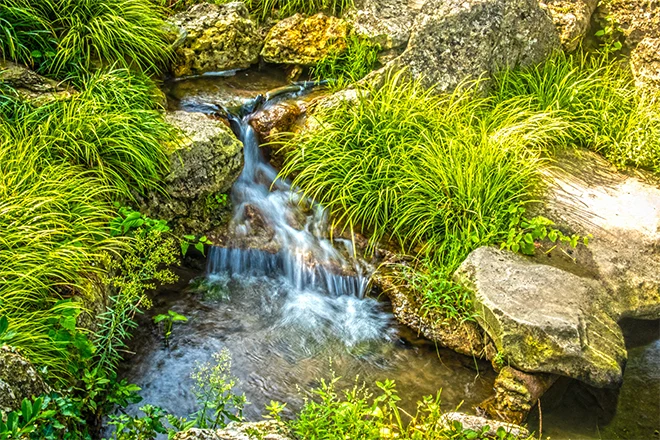
Have you ever dreamed of having a peaceful, babbling brook right in your backyard? Wondering how you can turn that dream into a reality?
In this guide, you’ll learn how to build a backyard stream, from picking the perfect spot to adding the finishing touches.
By the end of this post, you’ll know what’s involved in doing a pondless water feature construction in your backyard in Morganton.
Overview Of How To Build A Backyard Stream
- Choose The Best Location
- Design Your Stream
- Gather Materials and Tools
- Excavate the Basin and Streambed
- Lay the Underlayment and Liner
- Add Rocks and Gravel
- Install the Pump and Filtration System
- Enhance Your Stream with Plants and Decorations
- Fill the Stream with Water
- Trim and Hide the Liner
- Make Final Adjustments
- Add Optional Features
Step 1: Choose The Best Location
Choosing the best location is crucial when learning how to build a backyard stream.
The right spot ensures your backyard stream enhances the overall look of your outdoor space and functions efficiently.
The location you choose for your stream will affect its appearance, maintenance needs, and how well it integrates with your yard. An optimal location allows for better water flow and minimizes maintenance.
Factors To Consider
Consider the shape and size of your yard, which will influence the design and length of your stream. If you have a large, open yard, you can create a longer, meandering stream. In a smaller yard, a compact, more straightforward design might be more suitable.
Take into account any existing garden features, such as a garden pond or flower beds. The stream should complement these elements rather than compete with them.
Place your stream where you can easily enjoy it from your patio, deck, or other outdoor seating areas.
If your yard has natural slopes, use them to your advantage. A slope helps create a natural stream flow, making the stream look more authentic.
Tips For Finding Natural Slopes
Spend time observing your yard during and after rain to see how water naturally flows. This can help you determine the best path for your stream. Utilize any natural changes in elevation to create a cascading effect or backyard waterfall, enhancing the stream’s visual and auditory appeal.
Step 2: Design Your Stream
Designing your stream is a crucial step in how to build a backyard stream.
A well-thought-out design ensures your stream looks natural and functions well.
Decide if you want a straight stream, a winding path, or a combination. Meandering streams look more natural and can create interesting focal points in your yard.
The size should be proportionate to your yard. A small stream can be just as impactful in a smaller space as a larger stream in a bigger yard.
Use natural materials like river rocks and aquatic plants to blend the stream with your yard.
Incorporate other water features, such as a small pool or a garden pond, to create a cohesive design.
Step 3: Gather Materials And Tools
The Materials
- Underlayment to protect the pond liner from punctures and damage
- EPDM pond liner
- Rocks and gravel to create a natural look and provide stability to the streambed
- Aquatic plants
- Pumps for circulating water from the lower basin to the upper pool
- Hose kit with connections to ensure proper water flow throughout the stream
Choose materials that can withstand the elements and regular use. Select rocks, gravel, and plants that match the natural look you want to achieve. Ensure all components work together to create a seamless and efficient water flow.
Necessary Tools
- Shovel and wheelbarrow for digging and moving soil and rocks
- Gloves and knife for handling materials and cutting liners and hoses
- Tamp and level to ensure a flat, stable base for the liner and streambed
- A garden hose or spray paint is useful for outlining your stream design before you start digging
Clear the area by removing any debris, plants, or obstacles from the stream’s path. Organize your tools and materials to keep everything within easy reach to streamline the building process.
Step 4: Excavate The Basin And Streambed
Excavating the basin and streambed is a critical step in how to build a backyard stream. Proper excavation ensures a stable foundation and effective water flow.
Start by using a garden hose or spray paint to mark the stream’s path.
Dig the basin, making it inches deeper than the planned water level to accommodate the pump and gravel bed.
Then, excavate the streambed to a depth that matches your design, ensuring the bottom is sloped gently to facilitate water flow properly.
Ensure the streambed is deep enough to hold sufficient water without causing overflow.
Maintain a consistent slope to avoid stagnant water and ensure a steady flow.
Use a level to check the gradient frequently.
Step 5: Lay The Underlayment And Liner
Laying the underlayment and liner is essential for protecting your stream from leaks and ensuring longevity. The underlayment acts as a protective barrier between the soil and the pond liner, preventing punctures and extending the lifespan of your liner.
Roll out the underlayment first, ensuring it covers the entire streambed and basin.
Follow with the EPDM liner, positioning it carefully to avoid wrinkles and folds.
Smooth out the liner, allowing it to settle naturally into the contours of the streambed.
Overlap the liner edges and secure them with rocks or other heavy objects. Use a tight liner technique to minimize gaps and potential leaks.
Ensure the liner extends beyond the streambed edges to prevent water from escaping.
Step 6: Add Rocks And Gravel
Adding rocks and gravel to your backyard stream enhances its natural appearance and helps stabilize the streambed.
Arrange rocks of various sizes along the streambed, starting with larger rocks at the base.
Fill gaps with smaller stones and gravel to create a cohesive and natural look.
Ensure the rocks are securely placed to prevent shifting.
Place rocks strategically to guide the water flow and create visual interest. Use a mix of shapes and sizes to mimic natural streams. Avoid overcrowding the streambed, allowing space for water to flow freely.
Different sizes of rocks provide stability and prevent erosion. They also add texture and depth to your stream, making it more visually appealing.
Step 7: Install The Pump And Filtration System
Choosing and installing the right pump and filtration system is crucial for maintaining a healthy and flowing stream in your backyard.
The pump ensures that water flows continuously, creating the beautiful effect of a natural stream, while the filtration system keeps the water clean and clear.
Choosing The Right Pump
When learning how to build a backyard stream, selecting the appropriate pump is vital.
Pumps come in two main types: submersible and external.
Submersible pumps are placed directly in the water, making them easier to hide and typically quieter. They are ideal for small streams and ponds in residential areas like Morganton, NC.
External pumps, on the other hand, are more powerful and suitable for larger streams or water features with a high flow rate.
Installing The Pump
Begin by placing your pump at the lowest point of the basin.
For submersible pumps, ensure the pump is submerged and securely positioned. Connect the pump to the power source using a ball valve to control the flow rate if needed.
For external pumps, create a firm foundation and connect the pump to your stream using PVC pipes.
Adding Filtration
A good filtration system helps maintain clear pond water and reduces maintenance. Consider using a biological filter, which houses beneficial bacteria that break down organic waste.
Install the filter in line with the pump, ensuring that water passes through the filter before re-entering the stream.
Step 8: Enhance Your Stream With Plants And Decorations
Adding plants and decorations to your backyard stream enhances its beauty and supports the ecosystem.
Aquatic plants can help filter the water and provide habitat for wildlife, while decorations like stepping stones and decorative boulders add visual interest.
Selecting Aquatic Plants
Choose plants that thrive in wet conditions and can tolerate both full sun and partial shade.
Aquatic plants such as water lilies, creeping Jenny, and pickerelweed are excellent choices. These plants help keep the water clean and provide a natural look to your stream.
Adding Decorative Elements
Incorporate decorative boulders, stepping stones, and other features to create a visually appealing water feature.
Place these elements strategically to guide the water flow and create focal points. Consider adding a backyard waterfall for added sound and movement.
Step 9: Fill The Stream With Water
Filling your backyard stream with water is a critical step in bringing your project to life. This step allows you to check for leaks and make any necessary adjustments to ensure a smooth water flow.
Start by slowly filling the stream with water from a garden hose.
Monitor the water level and check for any leaks or areas where the water flow may be obstructed.
Adjust the rocks and plants as needed to create a natural, uninterrupted flow.
Ensure that the liner underneath the streambed is secure and that there are no gaps where water can escape.
Step 10: Trim And Hide The Liner
After filling the stream with water and ensuring everything is in place, it’s time to trim the excess liner and hide it to maintain a natural appearance.
Carefully trim any excess liner around the edges of the stream using a sharp knife. Leave enough liner to prevent water from escaping but not so much that it is visible above the ground.
Cover the trimmed liner with rocks, gravel, or mulch to blend it seamlessly with the surrounding landscape.
Use plants and decorative elements to further conceal any visible liner and enhance the overall appearance of your stream.
Step 11: Make Final Adjustments
Making final adjustments ensures that your backyard stream looks perfect and functions efficiently. This step involves tweaking the placement of rocks, plants, and other elements to achieve the desired water flow and visual appeal.
Rearrange the rocks and gravel to create a natural look and ensure smooth water flow. Pay attention to areas where water may be pooling or flowing too quickly, and adjust accordingly.
Use waterfall foam sealant to fill gaps between rocks and secure them in place. This sealant helps prevent leaks and keeps the rocks stable, ensuring a long-lasting structure.
Step 12: Add Optional Features And Finishing Touches
Adding optional features and finishing touches can elevate your backyard stream from beautiful to breathtaking.
Consider incorporating lighting, additional decorations, and regular maintenance to keep your stream in top condition.
Lighting your stream can create a magical atmosphere in your outdoor space, especially at night. Use waterproof LED lights to illuminate the water and surrounding features, highlighting the beauty of your stream.
Final Inspection And Maintenance Tips
Conduct a thorough inspection to ensure everything is in place and functioning correctly.
Check for any leaks, ensure the water flows smoothly, and make any necessary adjustments.
Regular maintenance, such as cleaning the pump and filter and trimming plants, will keep your stream looking its best.
Common Mistakes To Avoid When Building A Backyard Stream
Mistake 1: Poor Planning And Design
- Skipping the Planning Phase: Not taking the time to design the stream layout can lead to a less attractive and functional water feature.
- Ignoring the Natural Landscape: Failing to consider the yard’s natural slopes and existing features can result in unnatural-looking streams.
Mistake 2: Incorrect Location Selection
- Choosing a Flat Area: Building a stream in a completely flat area can make it difficult to create a natural flow and might require additional work to create an artificial slope.
- Proximity to Trees and Roots: Placing the stream too close to large trees can lead to root interference and damage to the liner.
Mistake 3: Inadequate Excavation
- Shallow Digging: Not digging deep enough can lead to water spilling over the edges and inefficient water flow.
- Uneven Basin and Streambed: Failing to level the basin and streambed can cause water to pool in unwanted areas.
Mistake 4: Improper Liner Installation
- Using the Wrong Type of Liner: Selecting a non-durable liner can lead to tears and leaks.
- Poor Liner Placement: Not smoothing out the liner can cause folds that trap debris and hinder water flow.
Mistake 5: Insufficient Pump And Filtration System
- Undersized Pump: Using a pump that is too small for the stream can result in weak water flow.
- Lack of Filtration: Not installing a filtration system can lead to dirty and stagnant water.
Mistake 6: Incorrect Rock And Gravel Placement
- Overcrowding Rocks: Placing too many rocks can obstruct water flow and make the stream look cluttered.
- Unsecured Rocks: Failing to secure rocks properly can cause them to shift and damage the liner.
Mistake 7: Ignoring Plant Compatibility
- Using Inappropriate Plants: Selecting plants that cannot thrive in aquatic environments can lead to poor plant health and unattractive stream banks. Invasive species will cover your pond and crowd out other plants.
- Overplanting: Planting too densely can crowd the stream and disrupt water flow.
Mistake 8: Neglecting Regular Maintenance
- Skipping Routine Checks: Not regularly checking for leaks, blockages, and pump functionality can lead to bigger issues.
- Ignoring Seasonal Care: Failing to adjust care routines for different seasons can harm the stream and surrounding plants.
Mistake 9: Overlooking Safety Measures
- Inadequate Childproofing: Not considering safety measures if children will be near the stream can pose a hazard.
- Electrical Safety: Improper handling of electrical components for pumps and lights can be dangerous.
Mistake 10: Unrealistic Budgeting
- Underestimating Costs: Not accounting for all expenses, including materials, tools, and potential professional help, can lead to incomplete projects.
- Ignoring Long-term Costs: Failing to consider maintenance and replacement costs can strain future budgets.
Streamline Your Dream With Morganton Ponds & Hardscapes
Building a backyard stream can be a challenging task, but Morganton Ponds & Hardscapes can handle all your pond construction needs. Our experts ensure every detail is perfect, from design to final touches.
Ready to transform your own backyard into a serene retreat with flowing water? Fill out our contact form today, or give us a call to get started!