Build It Right: Choosing the Material That Holds Up

What’s the best material to keep your yard looking great and your soil right where it belongs? Not sure which option will last or match your landscape style?
This post breaks down the most common retaining wall materials, from concrete and wood to stone and gabion cages—so you know exactly what you’re working with.
By the end, you’ll feel confident picking a material that looks good, holds strong, and fits the budget for your retaining wall project.
Best Retaining Wall Materials (Quick Answer)
Here are the most popular retaining wall materials, listed with their key advantages:
- Concrete Block: Durable, versatile, easy to curve.
- Wood (Timber): Affordable and easy to install, ideal for shorter walls.
- Poured Concrete: Strongest option, ideal for modern aesthetics.
- Stone Veneer: Offers a natural look over a solid structural core.
- Brick: Traditional and durable, requires experienced labor.
- Dry Stone/Boulder: Rustic and natural, labor-intensive.
- Gabion: Eco-friendly, requires minimal skill.
Contact us today about your retaining wall.
Concrete Block Retaining Walls
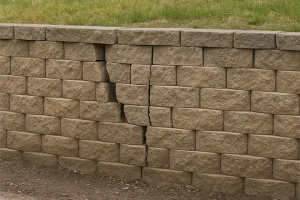
Concrete block is one of the most popular retaining wall materials for both professional and DIY use. It’s made to stack easily and comes in interlocking options that boost stability without needing mortar.
These blocks work well for curves, terraces, and level changes in the landscape. They also offer a wide range of textures to match your outdoor space. You can use them for a variety of retaining wall ideas.
Just be sure to include proper drainage and build on a stable base to avoid shifting or leaning over time.
Pros:
- Strong and modular
- Easy to build with interlocking concrete blocks
- Suitable for curves and terraces
- Widely available in different textures
Cons:
- Heavy and hard to move
- Limited height without reinforcement
- Requires proper drainage behind the wall
Wood Retaining Walls
Wood is a go-to material for simple, small retaining walls thanks to its natural appearance and ease of use. It’s often used in gardens and rustic settings where blending into the landscape matters.
Pressure-treated lumber or railroad ties are common choices, offering basic durability for short-term use. While it’s cost-effective, wood breaks down faster than concrete or stone over time.
It’s best reserved for walls under 4 feet.
Pros:
- Easy to cut and install
- Affordable for most projects
- Blends well with natural surroundings
Cons:
- Can rot over time
- Not ideal for walls over 4 feet
- Shorter lifespan than other materials
Poured Concrete Retaining Walls
Poured concrete is one of the strongest retaining wall materials and offers a clean, modern look.
It’s often used in places where the wall needs to support a lot of weight or where custom shapes and finishes are desired. These walls can be smooth, textured, or even stamped to fit a variety of styles.
However, they require expert installation and can crack if not reinforced properly. With the right design and drainage, poured concrete walls can last for decades.
Pros:
- Very strong and long-lasting
- Custom shapes and finishes are possible
- Great for modern landscape design
Cons:
- Prone to cracking without control joints
- Not DIY-friendly
- Needs experienced contractors for installation
Stone Veneer Retaining Walls
Stone veneer gives the look of natural stone without the full weight or cost. It’s a thin layer of decorative stone applied over another wall material like concrete block or poured concrete.
The wide variety of colors and textures makes it easy to match your home and outdoor space. It’s ideal for creating a high-end look without using full stone construction. However, it’s purely aesthetic and needs a strong backing wall to support it.
Pros:
- Offers classic aesthetic appeal
- Lightweight compared to real stone
- Wide range of textures and colors
Cons:
- Only decorative, not structural
- Needs skilled installation
- Must be applied over another material
Brick Retaining Walls
Brick is a timeless choice that fits well with traditional homes and garden designs. It provides a neat, organized appearance and can hold up well when built with proper drainage and support.
Brick walls require a solid foundation and careful planning to avoid moisture issues. They’re labor-intensive and not ideal for DIY, but they deliver lasting beauty and strength. Brick is also a great match for fire pits, patios, or walkways.
Pros:
- Durable and long-lasting
- Matches traditional architecture
- Clean, uniform appearance
Cons:
- Labor-intensive to install
- Requires careful drainage planning
- Not ideal for DIY projects
Dry Stone or Boulder Retaining Walls
Dry stone walls use stacked stone without mortar, creating a natural, timeless appearance.
These walls are known for their excellent drainage and ability to shift slightly with ground movement. They’re especially fitting for countryside or rustic landscape design.
Because each stone is placed by hand, building these walls takes time and skill. They work best for low walls and garden accents, not large retaining structures.
Pros:
- Natural, rustic look
- Excellent drainage
- Easy to adjust or rebuild
Cons:
- Takes time and skill to build right
- Not ideal for tall walls
- Needs a stable base to prevent leaning
Gabion Retaining Walls
Gabion walls are made from wire cages filled with rock or gravel and are commonly used in erosion-prone areas. They’re flexible, durable, and surprisingly easy to install, even on uneven terrain.
These walls can take on an industrial or rugged look, depending on the stone used. Gabion walls are also eco-friendly, often reusing leftover or local stone. However, the wire mesh can rust over time and may not suit every landscape style.
Pros:
- Adapts to shifting soil
- Great for erosion control
- Can use recycled materials
Cons:
- Metal cages may rust over time
- Industrial appearance may not suit all styles
- Takes up more space than solid wall types
Holding It All Together with Morganton Ponds & Hardscapes
At Morganton Ponds & Hardscapes, we build retaining walls that don’t just hold back earth—they bring structure and style to your outdoor space. Whether you need curved interlocking concrete blocks, rustic dry stone, or sleek poured concrete walls, our team is ready to create something that lasts.
Let’s talk about the best wall material for your yard and how we can turn your ideas into a finished project you’ll love. Fill out our contact form today or give us a call—we’re here to help you build with confidence.