A Natural Oasis: Crafting Balance In Your Backyard

What if your backyard could have a serene, self-sustaining water feature? How do professionals create ponds that seem to care for themselves?
In this post, you’ll discover exactly how a contractor should build a beautiful ecosystem pond that mirrors nature’s balance.
By the end, you’ll know whether or not you want an ecosystem pond for your pond building project.
Quick Answer: The 7 Steps To Build An Ecosystem Pond
- Choose the Right Location
- Plan the Pond Layout
- Dig the Pond and Install the Liner
- Add Rocks and Gravel
- Install Filtration and Recirculation Systems
- Introduce Aquatic Plants
- Add Fish
Why Build An Ecosystem Pond?
Building an ecosystem pond offers several compelling benefits.
These ponds are low maintenance and mimic natural ecosystems, reducing the need for chemicals and frequent cleaning.
They also promote biodiversity by creating a habitat for fish, plants, and local wildlife while improving water quality and removing excess nutrients.
Ecosystem ponds are visually stunning and provide a tranquil escape, with vibrant plants and colorful fish complementing the relaxing sounds of flowing water.
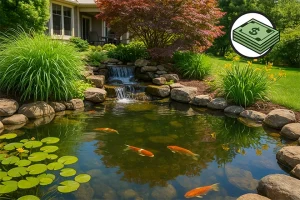
How much does it cost to build a pond?
How To Build An Ecosystem Pond
1. Choose The Right Location
Select a sunny spot where your pond will receive at least six hours of sunlight each day to support aquatic plants and a healthy ecosystem. Avoid areas with heavy tree cover to minimize pond debris, like leaves, that can disrupt the pond’s balance.
2. Plan The Pond Layout
Use a garden hose to outline the pond’s shape, ensuring it suits your landscape and allows for a naturally balanced pond. Include shelves for marginal plants and varied depths for koi fish, submerged plants, and other aquatic species.
How do you design a backyard pond?
3. Dig The Pond And Install The Liner
Excavate the area to the planned depth, creating angled sides for stability. Lay down a durable pond liner, extending it beyond the edges to secure it with rocks and gravel. A properly installed liner prevents leaks and helps maintain efficient water circulation.
4. Add Rocks And Gravel
Cover the pond liner with rocks and gravel to anchor it and create surface area for beneficial bacteria to thrive. This step supports the ecosystem by breaking down fish waste and organic debris, reducing algae growth naturally.
5. Install Filtration And Recirculation Systems
Set up a filtration system, including a biological filter and a mechanical filter, to maintain water quality. Install a pond pump to keep an efficient circulation system that oxygenates the water and supports the ecosystem’s overall health.
How do you choose the right pond pump?
6. Introduce Aquatic Plants
Add a mix of aquatic plants, such as floating plants, submerged plants, and marginals, to absorb excess nutrients and provide oxygen. Plants like water lilies and thin-leaved species add beauty and improve water quality while reducing string algae growth.
Don’t forget about landscaping around the pond.
7. Add Fish
Introduce koi fish or goldfish to eat algae and control mosquito populations. Start with a few to allow the pond’s ecosystem to balance. Fish waste provides nutrients for pond plants, completing the natural cycle.
DIY vs. professional backyard pond building.
Essential Components Of An Ecosystem Pond
Filtration System
A combination of biological filters and pond skimmers helps remove debris and maintain water quality.
The biological filter encourages beneficial bacteria to colonize.
The mechanical filter traps organic debris like leaves and dirt.
Efficient Circulation System
A pond pump ensures water movement, preventing stagnation and maintaining proper oxygen levels. Recirculation systems often include waterfalls or streams to add character and aeration to the water feature.
Rocks And Gravel
Rocks and gravel protect the pond liner from UV rays and provide an area for beneficial bacteria to grow. These elements break down organic matter and fish waste, keeping the pond clean and balanced.
Aquatic Plants
Plants are essential for a healthy pond ecosystem.
They absorb excess nutrients, reduce algae growth, and add oxygen to the water.
Marginal plants offer proper coverage while floating plants like water lilies provide shade and help stabilize water temperature.
Fish
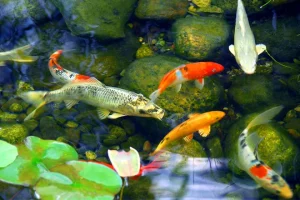
Fish are an integral part of a pond’s ecosystem. Their waste contributes to the nutrient cycle, supporting plants and algae control.
Koi fish and goldfish add life and color, making the pond both functional and beautiful.
What else do you need to know before installing a backyard pond?
With Morganton Ponds & Hardscapes
Creating the perfect low-maintenance ecosystem pond takes expertise, precision, and a deep understanding of nature’s balance. Morganton Ponds & Hardscapes has the tools, knowledge, and passion to transform your backyard into a thriving aquatic haven that brings beauty and tranquility to your home.
Ready to make your dream pond a reality? Fill out our contact form today or give us a call to take the first step toward your stunning, naturally balanced pond in Morganton, NC.