Keep Your Pond Pristine: Understanding And Tackling Algae
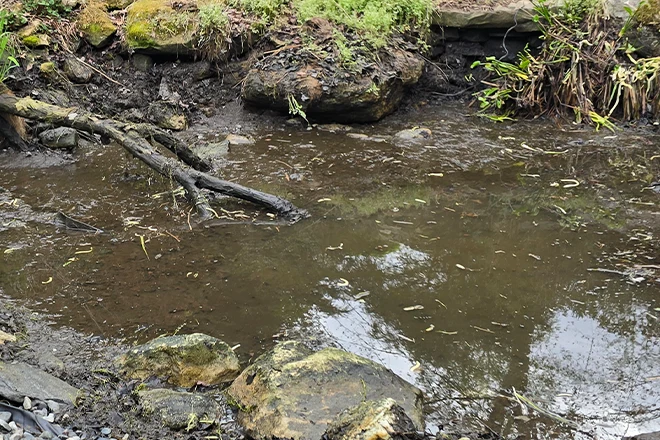
Are you tired of looking at a green, murky pond instead of the clear water paradise you envisioned? Do you worry about the health of your fish amidst all that algae?
In this post, we’ll explore the best koi pond algae control strategies for your backyard koi pond, tailored specifically for pond owners in Morganton, NC.
By the end of this guide, you’ll be better equipped to know what pond maintenance tasks can help you regain your beautiful pond and ensure a healthier environment for your koi.
Koi Pond Algae Control Methods For Morganton Pond Owners
- Mechanical filters
- Manual algae removal
- Correct pond design
- Beneficial bacteria
- Living water filters
- Adding rocks and gravel
- Using algaecides
- Natural treatments
- Technological systems
- Professional cleaning
Mechanical And Physical Koi Pond Algae Control Methods
Designing Ponds To Prevent Algae
Designing your pond with algae control in mind is a proactive way to prevent algae problems before they start.
Creating ponds with adequate depth and steep banks minimizes the amount of shallow water, which is more susceptible to algae growth.
Additionally, positioning your pond in areas with partial shade can significantly help control algae by reducing the amount of direct sunlight the water receives.
For residents in the Flat Gap area of Morganton, this could mean strategically placing ponds near trees or structures that provide afternoon shade, creating a beautiful pond environment that’s easier to manage.
Mechanical Filters
You can install more mechanical filters to help with koi pond algae control.
Skimmers and UV filters are specifically designed to help control algae growth by trapping debris and utilizing UV light to kill algae.
Regular cleaning and maintenance of these filters are essential to their effectiveness. By maintaining these filters, homeowners can ensure that the water stays clean and clear, reducing the likelihood of algae blooms.
For neighborhoods like Jonas Ridge, having robust mechanical filters is critical for maintaining pond health.
Manual Algae Removal
Another effective method for controlling algae in koi ponds is manual removal.
Techniques such as raking can physically remove string algae and other types of algae from the pond surface. This method provides immediate results and can be particularly useful after storms or in seasons when algae tend to flourish due to excess nutrients or sunlight.
In areas like Morganton West, regular manual removal can prevent algae from overtaking the pond ecosystem.
Biological Koi Pond Algae Control Strategies
Using Beneficial Bacteria
Introducing beneficial bacteria into your koi pond is a natural and effective method to help control algae growth.
These bacteria enhance the pond’s biological filter by breaking down organic matter and consuming excess nutrients that algae would otherwise use to thrive.
For residents of the Morganton area, like in the Petche Gap neighborhood, adding beneficial bacteria can be especially beneficial during the warm months when algae growth peaks.
Regular additions of these bacteria, along with proper feeding practices and regular maintenance, ensure a balanced pond ecosystem and minimize the occurrence of nuisance algae.
Living Water Filters
Living water filters, including both aquatic plants and fish, play a crucial role in maintaining the health of your koi pond by naturally controlling algae.
Aquatic plants, such as water lilies and submerged plants, consume nutrients and block sunlight, helping to prevent algae from thriving.
Similarly, certain fish species are known to feed on algae, aiding in koi pond algae control.
Installing living water filters in ponds located in the Oak Hill area of Morganton not only enhances the aesthetic value but also contributes to a self-sustaining ecosystem that naturally keeps algae at bay.
Adding Rocks And Gravel
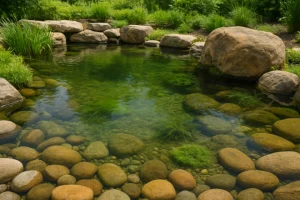
Incorporating rocks and gravel into the pond design is more than just a visual enhancement; it’s a functional strategy to control algae.
These materials provide a large surface area for beneficial bacteria to colonize, enhancing the natural filtration process and helping to maintain clearer water.
For koi ponds in areas like Pumpkin Center, adding rocks and gravel can also help stabilize the pond’s edges and prevent rainwater runoff, which often carries pollutants and additional nutrients that can fuel algae growth.
Chemical Algae Treatments
Algaecides are chemicals specifically designed to kill algae and can be a quick solution for severe algae blooms.
However, they must be used cautiously as they can harm fish and other aquatic life if not used according to the recommended dose.
Koi pond owners in Morganton, particularly in the Forest Hill area, should consider algaecides as a last resort for koi pond algae control and focus on maintaining water quality.
When necessary, opt for products approved for use in fish ponds and follow the label directions precisely.
*It is a wise move to look for algaecides that are fish and plant-friendly.
Natural Koi Pond Algae Control
Natural treatments, such as barley straw or white vinegar solutions, offer a gentler alternative to chemical algaecides.
Barley straw slowly releases compounds that inhibit algae growth as it decomposes, while acetic acid in white vinegar can effectively kill algae on contact.
It’s important to apply these treatments in moderation to avoid disrupting the pond’s pH and harming aquatic life.
Preventative Maintenance And Regular Care
Routine Cleaning And Maintenance
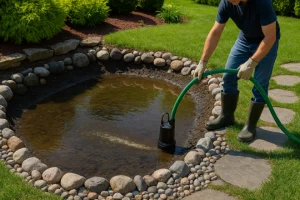
Regular cleaning and following the correct pond maintenance steps are fundamental in koi pond algae control and maintaining a healthy koi pond.
This includes clearing out sludge, removing debris, and ensuring all equipment, like pumps and filters, are functioning correctly.
For communities such as Riverstone, where environmental factors can contribute to pond debris, establishing a consistent maintenance schedule is key to keeping the pond ecosystem healthy.
Most pond owners hire a professional pond contractor to handle this, as it is time-consuming and difficult.
Feeding Practices And Nutrient Management
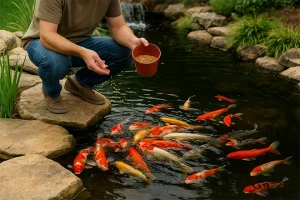
Proper feeding practices are critical to managing nutrients within the pond, which in turn helps with koi pond algae control.
Overfeeding fish can lead to excess nutrients, which fuel algae growth. Koi owners in Morganton, such as in neighborhoods like Table Rock, should feed their fish only as much as they can consume in a few minutes and ensure that the feed is of high quality to reduce waste.
Monitoring Water Quality
Regularly testing and adjusting the water parameters in your koi pond is essential for maintaining an environment that discourages algae growth.
Monitoring factors such as pH, nitrogen levels, and oxygen levels can help detect imbalances early and allow for timely corrections.
This practice is crucial in areas like Oak Forest, where varying water sources can affect pond conditions.
Innovative Solutions And Expert Advice On Koi Pond Algae Control
Technological Advances In Algae Control
In the evolving world of pond maintenance, technological innovations continue to enhance the way we manage algae in koi ponds.
For example, the Ion Gen system, which introduces ions that specifically target and disrupt algae cells without harming other aquatic life, represents a significant advancement in algae control.
This technology is particularly effective for dealing with string algae and green water algae, making it an excellent addition to ponds in Morganton’s Magnolia neighborhood.
Homeowners looking to integrate more sophisticated koi pond algae control solutions can consider these technologies as part of a comprehensive algae management strategy.
Consulting With Professionals
Sometimes, the best course of action for controlling algae involves calling in the experts.
Professional pond contractors bring a wealth of knowledge and experience specifically designed to create and maintain a balanced pond ecosystem.
For residents in the Calvin area of Morganton, professional consultations can provide customized solutions for unique pond environments, helping to address issues such as excessive nutrients, improper pond construction, or inadequate filtration systems that contribute to algae problems.
Here’s the cost of pond maintenance in Morganton.
Understanding Algae In Koi Ponds
Types Of Algae
Understanding the different types of pond algae is crucial for effective control in koi ponds. Green water algae, string algae, and the potentially harmful blue-green algae (cyanobacteria) are the most common types found in backyard ponds. Each type has unique characteristics and requires specific strategies to manage. For example, blanket weed, a form of string algae, thrives in nutrient-rich waters. Recognizing the type of algae you are dealing with is the first step in effectively controlling its growth.
Causes Of Algae Growth
Algae growth in koi ponds is primarily fueled by sunlight, excess nutrients, and stagnant water. In Morganton’s Riverside community, controlling these factors can significantly reduce the prevalence of algae. Strategies such as planting floating plants to shade the water, ensuring regular maintenance to remove organic debris, and installing proper filtration can all help mitigate the factors that contribute to algae growth.
Dive Into Clarity With Morganton Ponds & Hardscapes
Morganton Ponds & Hardscapes is your expert ally in turning troubled waters into serene aquatic landscapes. Whether it’s deploying cutting-edge technology like Ion Gen systems or conducting regular pond health checks, we have the tools and expertise to ensure your pond remains a jewel in your landscape.
If you’re ready to combat algae and restore the natural beauty of your pond, don’t hesitate to reach out. Fill out our contact form today, or give us a call to see how we can help you maintain a pristine pond environment.